Key Takeaways:
- Women-led businesses continue despite restrictions.
- Returnees are adding pressure to fragile communities.
- Women’s rights restrictions are deepening the crisis.
A senior United Nations delegation visiting northern Afghanistan, including UNAMA Afghanistan, has renewed international focus on the country’s worsening humanitarian and economic conditions, particularly the struggles faced by women entrepreneurs and returning Afghan families.
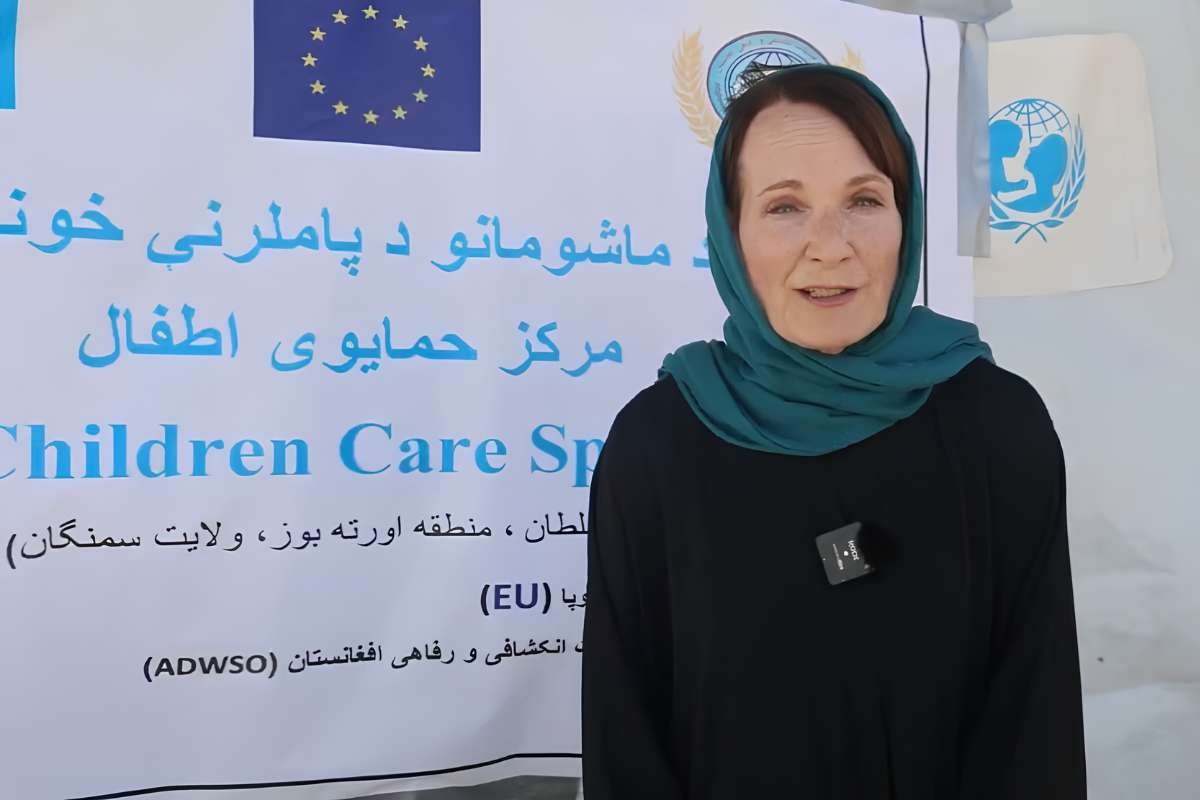
Georgette Gagnon, the acting head of the United Nations Assistance Mission in Afghanistan (UNAMA Afghanistan), traveled to the provinces of Balkh and Samangan this week to meet local Taliban officials, business owners, aid workers, and Afghan returnees. The visit was aimed at assessing the ground realities in communities facing rising economic pressure, unemployment, and limited access to opportunities.
One of the major focuses of the trip was the condition of women-led businesses operating under increasingly restrictive circumstances. During meetings with female entrepreneurs, concerns were raised over declining market access, financial instability, and restrictions affecting women’s participation in economic life.
Several women business owners reportedly shared how they have been forced to adapt their operations in order to continue earning livelihoods. Many now run small-scale or home-based enterprises due to social limitations and reduced mobility. Despite these obstacles, women entrepreneurs continue to play an important role in supporting families and sustaining local economic activity.
The discussions also highlighted the broader economic uncertainty across Afghanistan, where businesses continue to struggle with reduced consumer spending, banking challenges, and declining international investment. Small and medium-sized enterprises, once viewed as essential to urban economic growth, have been particularly affected by the country’s prolonged instability.
Gagnon emphasized the United Nations’ continued commitment to supporting Afghan civilians and maintaining humanitarian engagement across the country despite the ongoing challenges.
Returnees add pressure to an already fragile economy
The UN delegation also met Afghan returnees who have recently come back to the country from neighboring nations, including UNAMA Afghanistan. Their return has added another layer of strain to Afghanistan’s already fragile social and economic systems.
Many of the returning families are arriving with limited resources and uncertain prospects for employment, housing, education, or healthcare. Local communities in northern Afghanistan are increasingly facing pressure as they attempt to absorb growing numbers of displaced and returning individuals while dealing with their own economic hardships.
Humanitarian agencies have repeatedly warned that Afghanistan remains one of the world’s most severe humanitarian crises. Millions of people across the country continue to rely on aid for food, shelter, and basic services. Rising poverty, inflation, and unemployment have left many households unable to meet daily needs.
Northern provinces such as Balkh and Samangan have become important regions for humanitarian outreach because of increasing displacement and population movement. Aid organizations operating in the region say local infrastructure and social support systems are under mounting pressure.
The economic crisis has been worsened by reduced development funding, international sanctions-related complications, and a slowdown in private-sector activity. Banking restrictions and limited liquidity have also created difficulties for businesses and ordinary citizens trying to access financial services.
Women and children remain among the most vulnerable groups affected by the ongoing crisis. Humanitarian organizations argue that economic hardship has disproportionately impacted women-led households, particularly those dependent on small businesses or informal employment.
Global attention remains on women’s rights and humanitarian access
Global Attention Remains on Women’s Rights and Humanitarian Access
The visit by UNAMA Afghanistan officials comes as Afghanistan continues to face intense international scrutiny over restrictions on women’s rights and public participation. Since the Taliban’s return to power in 2021, policies limiting girls’ education and women’s employment have drawn widespread criticism from global institutions and human rights organizations.
Analysts believe these restrictions are not only reshaping Afghan society but also weakening the country’s long-term economic prospects. Reduced female workforce participation has limited household incomes, slowed entrepreneurial activity, and increased dependence on humanitarian aid.
Women entrepreneurs have increasingly become symbolic of Afghanistan’s broader economic and social struggle. While many continue operating under difficult conditions, others have been forced to scale back or shut down businesses entirely because of uncertainty and declining opportunities.
International agencies continue to maintain dialogue with Taliban authorities in an effort to preserve humanitarian operations and support vulnerable communities. However, aid groups warn that restrictions affecting women working in humanitarian and development sectors have complicated relief efforts in several parts of the country.
The UN delegation’s outreach in northern Afghanistan reflects growing concern that the country’s humanitarian challenges are becoming more deeply tied to long-term economic decline and social restrictions. With millions already dependent on aid and displacement continuing to rise, international organizations fear conditions could worsen further without sustained humanitarian support and broader economic stability.