
Working too hard can hurt your health. Busy days cause deep fatigue and bad pain. This is how chronic stress in women starts to harm their bodies. High pressure ruins your sleep and stomach. It alters your cycles and slows your healing. Do not ignore these vital warnings. Give your body the rest it needs. Read the full blog to spot these hidden signs and heal now.
You wake up tired even after a full night of rest. You think a busy day at work caused your bad headache. Most working women live with constant fatigue and just call it normal. We blame our packed schedules for the daily pain we feel.
Yet your body is trying to speak to you right now. See, prolonged strain affects your physical health way before your mind snaps. Today, we will show you the hidden signs of chronic stress in women. You will see how ongoing pressure shapes your body every day. Let us find out why you must stop ignoring these issues.
What Is Chronic Stress?
Normal stress helps you meet a quick deadline at your job. This fast reaction should fade away once your work is done. Your body is not built to keep this system turned on.
We must look at how cortisol and stress change the body. The hormone cortisol acts like a guard for your whole system. It changes how your heart, lungs, and stomach work each day.
Too much cortisol can change the baseline of your physical health. Prolonged stress means this guard never gets a chance to rest. Chronic stress in women happens when this cycle does not stop.
Our bodies react to life in a very unique way, too. Women experience stress differently because of our daily mix of hormones. Estrogen can make your body more sensitive to high cortisol levels. This constant pressure can harm your body over a long time.
Now we must look at how this harms your daily life. Let us look at the physical signs you might overlook today.
Why Working Women Often Ignore Stress Symptoms?
We manage heavy workloads at the office and take care of the home. This massive mental load makes us put our own needs last. Many working women handle everyone else before they check their own health. We assume a bad headache is just part of a busy life.
Workplace expectations tell us to push through the pain every day. We think our drop in energy is just a sign of aging. This line of thought makes us ignore real danger signs daily.
We normalize deep exhaustion instead of looking for the true cause. Self-neglect becomes a habit when you try to do it all. You think you are just tired from a long, hard week.
Yet these signs point directly to the effects of chronic stress. Your body is paying a high price for this constant rush. The signs of chronic stress in women can look like normal life changes.
We must stop treating our physical pain like a minor annoyance. Let us explore the first major warning sign you might ignore. We will dive into why your sleep patterns are changing now.
10 Physical Symptoms of Chronic Stress in Women
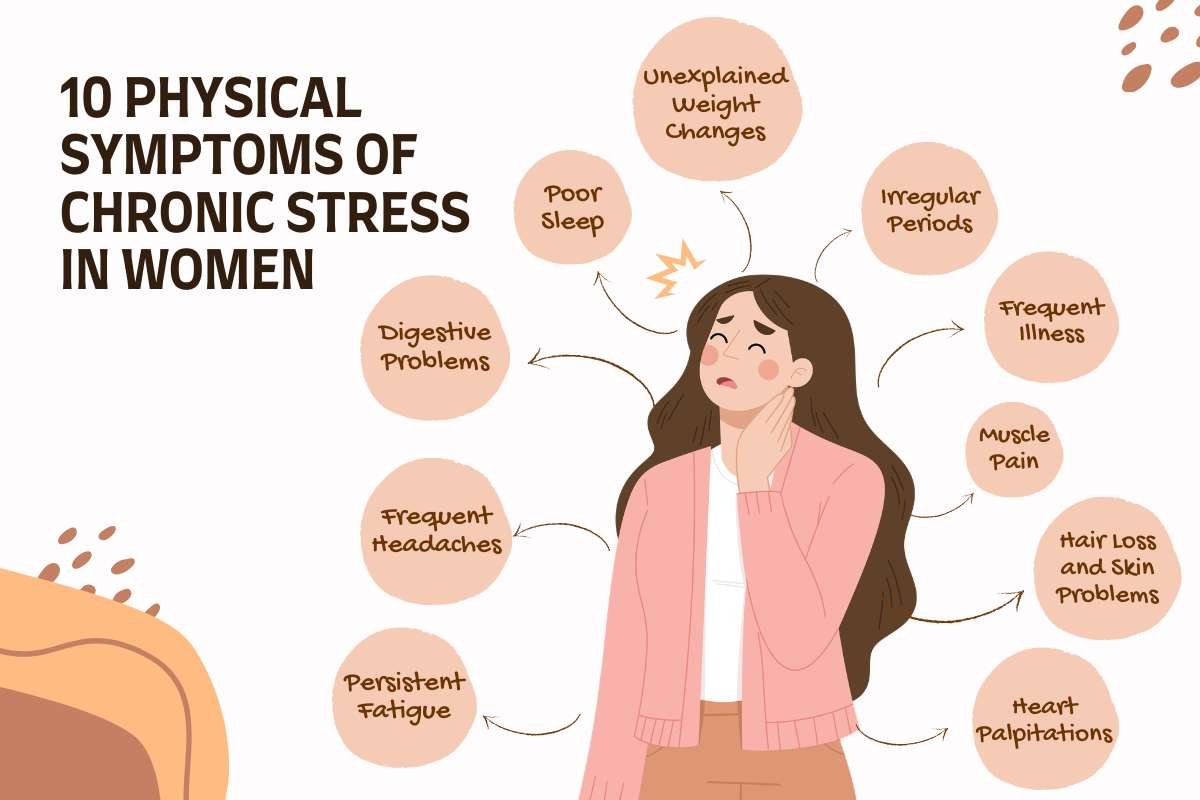
The body doesn’t just give up on you. It will start by showing signs of stress. If you see any of the following, it’s high time you took a break and visited a medical expert.
1. Persistent Fatigue
Normal tiredness disappears after you get a good night’s sleep. Deep exhaustion does not go away when you rest your body. A major cortisol imbalance keeps you feeling completely drained each day.
Your natural energy systems fail under too much daily pressure. We feel like we are constantly running on empty tanks. We cannot find our normal drive to do our work. This heavyweight slows down our steps all day long.
2. Frequent Headaches
Stress makes the muscles in your neck and shoulders very tight. This constant tension leads to painful headaches during your busy day. Many working women get bad migraines from this intense pressure. You can track these pain patterns to find your top triggers.
We often blame the bright office lights for our headaches. However, ongoing stress is the real cause of this daily ache. You must ease this pressure to find some real relief.
3. Digestive Problems
The gut and the brain share a very strong connection. High stress levels can upset this delicate system in your body. You may experience bad stomach bloating or severe acid reflux now. Some women face painful IBS flare-ups during busy work weeks.
We might also notice major changes in our daily food intake. You may lose your appetite or want to eat constantly. Your stomach reacts fast to the mental load you carry.
4. Poor Sleep
Your brain should lower cortisol levels when nighttime comes around. Yet constant stress ruins this natural rhythm and keeps you awake. You might find yourself waking up at three in the morning.
Many women have trouble falling asleep when their minds are racing. We end up getting very light sleep instead of deep rest. This bad sleep cycle makes us feel even worse the next day. We need quiet nights to heal our tired bodies completely.
5. Unexplained Weight Changes
High levels of cortisol can lead to fast weight changes. This hormone causes your body to hold onto deep belly fat. You may also feel strong cravings for sweet and salty foods. Some women experience a total loss of appetite when stressed out.
We blame our diets instead of looking at our mental state. These sudden physical shifts show that your system is out of balance. Your body stores energy because it feels a constant threat.
Read More:
- 10 Things You Can Do to Avoid Stress
- Health Tips for Working Women: A Guide to Balancing Wellness and Career
6. Irregular Periods
Stress hormones can disrupt the delicate signals that control your cycle. High cortisol can stop your body from releasing an egg normally. You might experience missed periods or very irregular cycles for months.
This hormonal shift affects your overall reproductive health in many ways. We must notice when our bodies skip these natural monthly signs. You should track your calendar to see these sudden changes. Your cycle shows how well your body handles daily stress.
7. Frequent Illness
High stress can weaken the defenses of your daily immune system. You may catch cold after cold and take weeks to heal. Some women feel like they are always fighting off a bug. This slow recovery happens when your body cannot defend itself well.
We lose our strength when we do not give ourselves rest. Your cells need peace to fight off these daily germs. Constant pressure leaves your body completely open to new infections.
8. Muscle Pain
Your body holds onto stress by tightening up your key muscles. You might experience sharp pain in your back or upper shoulders. Many women clench their jaws without even realizing they do it. This chronic muscle tension can cause lasting pain throughout your day.
We think we just sat in a bad office chair. Yet your body is reacting to the mental load you carry. You must learn to let go of this physical grip.
9. Hair Loss and Skin Problems
Stress hormones can cause bad flare-ups on your clear skin. You may notice sudden adult acne or very dry, itchy eczema. Some women experience heavy hair shedding when their stress levels rise. This happens because stress pushes hair into a resting phase early.
We buy expensive creams instead of calming our daily stress levels. Your outer look shows what is happening deep inside your body. True beauty and skin health start with a calm mind.
10. Heart Palpitations
You might feel your heart racing during a normal workday. High stress can increase your blood pressure over a long time. These sudden heart flutterings can feel very scary in the moment. We must pay close attention to these vital warnings from within.
You should seek medical care if you feel sudden chest pain. Do not wait to get help when your heart feels tight. Your cardiovascular system needs a break from this heavy load.
How Chronic Stress Affects Women’s Health Over Time?

We must trace how daily pressure turns into a lasting illness. Constant strain triggers a flood of cortisol inside your body. This high hormone level leads to deep inflammation in your tissues. Over time, this state causes massive metabolic disruption in your cells.
Your heart faces a much higher risk of disease from this. This pathway can lead directly to adult diabetes and weight gain. High cortisol levels also drain the strength from your strong bones. We can see how this path ruins our general physical health.
The damage goes deep into our mental well-being as well. This ongoing loop feeds severe anxiety and deep depression each day. Your reproductive system also suffers from this long-term stress. A major hormonal imbalance can harm your fertility and daily cycle.
Eventually, this path ends in complete burnout for working women. Your mind and body simply shut down from the constant load. We cannot ignore this pathway if we want to live well.
Now we must learn how to break this dangerous cycle. Let us look at when you should speak with a doctor.
When to Seek Professional Help?
| What You Feel | What It Means | What to Do |
| Daily Racing Heart | High physical strain | See a doctor fast |
| Missing Your Cycle | Major hormonal shift | Talk to your OBGYN |
| Constant Sadness | Impending mental burnout | Find a good therapist |
| No Sleep for Weeks | Broken cortisol rhythm | Get a sleep study |
The Golden Rule: If rest does not fix your exhaustion, your body needs professional care. Do not wait for a complete crash to seek help.
Practical Ways to Reduce Chronic Stress in Women

To fight the physical toll of chronic stress in women, we can act now. Let us break down these healing steps by effort level.
Low Effort: Daily Habits
- Morning Sunlight: Ten minutes of morning light resets your natural cortisol cycle. This helps you sleep much better at night.
- Protein-Rich Meals: Eating protein stabilizes your blood sugar and stops cortisol spikes. This keeps your daily energy very steady.
- Hydration: Drinking enough water lowers the physical strain on your heart. It prevents your body from launching a stress response.
Medium Effort: Weekly Habits
- Set Firm Boundaries: Say no to extra tasks at your busy job. This limits the mental load that triggers your nervous system.
- Social Support: Meet a good friend to release calming social hormones. Oxytocin naturally lowers your high heart rate and blood pressure.
- Digital Breaks: Turn off your screen to rest your overstimulated brain. This stops the constant flow of stress hormones.
High Effort: Professional Support
- Talk Therapy: Working with a therapist helps rewire your response to pressure. It teaches your brain to stay calm during hard times.
- Employee Support Programs: Use work benefits to lower your daily life stress. They offer tools to manage your heavy load.
- Medical Care: Seek a full checkup to test your hormone levels. A doctor can find any hidden damage from long-term strain.
This May Not Apply to You If…
These steps might not fit your life if you face unique challenges. We must look at these specific situations right now.
- You Work Night Shifts: Morning sunlight will not work well for your sleep schedule. You need to block out light during the day instead.
- You Have Chronic Illness: Diet changes and exercise may not cure your deep fatigue. Your primary health conditions require specialized medical care first.
- You Lack Schedule Control: Setting firm work boundaries is hard in gig economy jobs. You may need to focus on quick breathing tools instead.
- You Experience Food Insecurity: Buying fresh protein-rich meals is not always a realistic option. Focus on affordable canned beans to keep energy steady.
Read More:
Conclusion:
Our busy bodies often show the physical signs of stress first. We must listen to the quiet warnings before we completely crash. You must not accept these constant aches as a normal lifestyle. We can spot the real effects of chronic stress in women.
Taking small steps today can protect your future physical health. You do not have to carry this heavy load all alone. You should reach out for help when your body feels tired.
Simple daily shifts will help you build a much happier life. You have the power to heal and find your balance again. Your body deserves the care you give to everyone else now.
People Also Asked:
1. Can chronic stress cause physical pain?
Yes, constant mental strain keeps your muscles tight, which leads to lasting tension headaches and back pain.
2. How do I know if my fatigue is caused by stress?
Your exhaustion is likely stress-related if a full night of deep sleep still leaves you feeling completely drained.
3. Can chronic stress affect hormones in women?
Yes, high cortisol levels disrupt your delicate reproductive pathways and can easily make your monthly periods highly irregular.
4. Can chronic stress make you sick more often?
Ongoing pressure actively weakens your immune defense, which makes you catch colds easily and take longer to heal.
5. How long does it take to recover from chronic stress in women?
Your healing time depends on your body, but consistent daily rest can show positive physical shifts within a few weeks.
6. When should I seek medical help for stress-related symptoms?
You should see a doctor if your daily symptoms do not improve with rest or if you feel chest pain.