Getting a seat on a corporate board is notoriously difficult, especially for women securing their first position. Board committees usually want directors who already have real experience making big decisions and managing company risks. Gaining solid nonprofit board experience gives women executives a practical way to build that experience and show they are ready for corporate leadership.
Serving on the board of a nonprofit involves many of the same responsibilities as sitting on a company board. Women leaders help manage large budgets, hire and evaluate top executives, and guide long-term strategy. Handling these responsibilities proves that a leader knows how to protect an organization’s financial health and guide its future.
When companies look for new board members, actual leadership experience matters much more than just taking courses. Sitting on a non-profit board helps women build strong professional networks, master boardroom decision-making, and open doors to corporate board seats.
What nonprofit board experience actually involves?
Serving on a nonprofit board gives women leaders direct experience with governance and accountability. It also gives them a closer view of how organizations make major decisions.
Nonprofit boards carry real legal and financial duties. Board members must protect the organization’s money and resources. They also help guide its plans and review major decisions. The board must make sure the organization follows its mission and acts in its best interests.
The structure often looks similar to a corporate board. The main goal differs. Corporate boards focus on business results and shareholder value. Nonprofit boards focus on a mission. They must also keep the organization financially stable.
Financial oversight forms a key part of the role. Board members review budgets and financial reports. They may also review major spending plans and financial risks. Strategic planning is another common duty. Board members help set goals and review progress. Many nonprofit boards also oversee the executive director or CEO. This may include hiring and performance reviews. It can also include succession planning and pay decisions.
Fundraising often forms part of the board role too. Board members may introduce potential donors. They may support fundraising campaigns and events. Some also use their business networks to build support for the organization.
For women CEOs and entrepreneurs, this experience can add depth to their leadership skills. It gives them practice with decisions that affect money, people, mission, and public trust. These lessons can also strengthen their understanding of board leadership and accountability.
What skills nonprofit board experience builds?
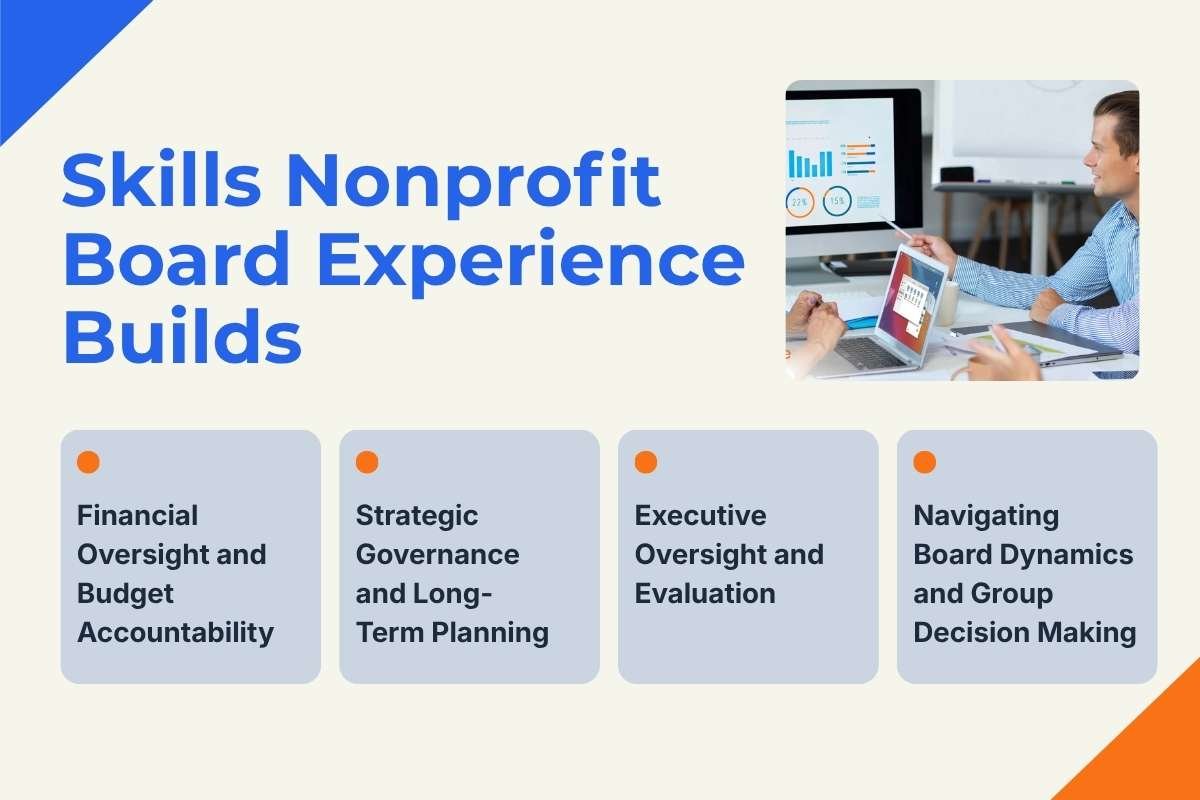
Nonprofit board experience can strengthen skills that women leaders already use in their businesses. It also exposes them to new forms of oversight and decision-making. The experience can help women CEOs and entrepreneurs prepare for larger governance roles.
1. Financial oversight and budget accountability
Board members must understand how the organization uses its money. They review budgets, financial reports, and major expenses. They also ask questions about cash flow, funding, and financial risks.
This work builds stronger financial judgment. It also teaches board members to review numbers without managing daily finances. Women entrepreneurs can use this skill when they assess business performance, investments, or growth plans.
2. Strategic governance and long-term planning
Nonprofit boards help set the organization’s direction. They review goals and track progress over time. Board members must also consider risks that could affect the organization later.
This kind of nonprofit board experience builds a wider view of strategy. Leaders learn to step back from daily operations. They focus on the decisions that can affect the organization over several years.
3. Executive oversight and evaluation
Boards often oversee the executive director or CEO. Members may help hire the leader and review their performance. They may also take part in succession planning.
This experience helps women leaders understand executive oversight from the board side. It can change how they view leadership reviews, performance goals, and accountability. These lessons can support women who may later join a corporate board.
4. Navigating board dynamics and group decision making
Board service also teaches leaders how groups make major decisions. Members may hold different views on spending, strategy, or organizational priorities. The board must still reach a clear decision.
Women leaders can learn to present ideas with evidence and listen to other views. They also learn when to challenge a proposal and when to support a shared decision. These skills can help them work with other directors and senior leaders in future board roles.
Why nonprofit board experience is often the first step for women leaders?
Nonprofit boards can give women leaders a practical way to enter board service. Many nonprofits need directors with skills in finance, marketing, technology, law, operations, fundraising, and business growth. This can create opportunities for women CEOs, founders, and senior executives who have strong leadership experience but no formal board experience.
Professional skills are most valued in board directors when nonprofits choose board members. Past board service may not always be a requirement. A founder can bring experience in growth and strategy. A CFO can bring financial knowledge. A technology leader can bring knowledge of digital systems and risks. Each person can meet a specific need on the board.
1. Real governance experience
Nonprofit board service also gives women real governance experience. Advisory roles can offer valuable business input. They do not always carry the same formal duties as a board role.
Nonprofit directors have clear responsibilities to the organization. They review financial reports and help guide strategy. They may also oversee senior leaders and take part in major decisions. Board members must also consider legal and financial duties.
This nonprofit board experience can strengthen a woman leader’s board profile. It shows that she can work at the board level and take responsibility for board decisions.
That difference matters when building a board career. An advisory role can show expertise and business judgment. A nonprofit board role can also show experience with formal governance and fiduciary duties.
The difference becomes clearer when comparing advisory boards and corporate boards.
How to choose the right nonprofit board as a strategic step?

The right nonprofit board can give women leaders more than a chance to support a cause. It can also build useful governance experience. Women CEOs and entrepreneurs should look at the board role with the same care they would give any major leadership opportunity.
Start by looking at the size and complexity of the organization. A larger budget can create more room for financial oversight and strategic decisions. Complex operations can also expose board members to wider business issues. A strong mission matters, but the board role should also offer meaningful governance work.
The right committee can add even more value. A finance or audit committee can build financial oversight skills. A governance committee can give you experience with board structure and director selection. Choose a committee that matches the skills you want to strengthen.
It also helps to review the board’s track record. Look at where past directors moved after their board service. Some may have joined larger nonprofits or corporate boards. Others may have taken on wider leadership roles.
This information can help you judge whether the board supports long-term growth. For women on corporate boards, the goal should be a role that offers real responsibility, useful experience, and a clear path for continued growth.
Conclusion
According to MSCI, as of 2025, women hold about 28.3% of board seats at large.
Securing a seat on a corporate board requires proving that you can handle high-level governance, fiduciary oversight, and strategic decision-making. Building strong nonprofit board experience provides female executives, founders, and CEOs with a direct, practical pathway to develop these skills outside primary operational roles and responsibilities of women on corporate boards. Managing multi-million-dollar budgets, overseeing committees, and steering organizations through major growth phases creates a verified track record of leadership.
For corporations seeking qualified female directors, non-profit governance serves as a proven testing ground for executive talent. Women who actively build their board presence through non-profit leadership enter corporate boardrooms with established authority, ready to guide enterprise strategy, evaluate risk, and drive long-term organizational success.
FAQs
1. How does nonprofit board experience prepare female leaders for corporate board roles?
It offers hands-on experience with fiduciary oversight, executive compensation, and committee leadership, demonstrating to nominating committees that a candidate can manage board-level responsibilities.
2. Why should female CEOs consider serving on a non-profit board?
Board service strengthens cross-sector leadership skills, improves high-stakes communication, and offers a fresh perspective on managing their own corporate boards.
3. Which non-profit committee assignments carry the most weight with corporate recruiters?
Positions on finance, audit, governance, and risk management committees align most closely with corporate board responsibilities.
Which non-profit committee assignments carry the most weight with corporate recruiters?
Positions on finance, audit, governance, and risk management committees align most closely with corporate board responsibilities.
5. What is the best way for female executives to find strategic non-profit board seats?
Leaders can leverage executive networks, partner with board placement firms, or connect with organizations that place qualified female executives into governance roles.