

Asynchronous management is a way of working where teams do not rely on real-time communication to complete tasks. Read how this approach allows individuals to focus deeply, collaborate across time zones, and maintain productivity without the pressure of being online at the same time.
82.9% of workers say asynchronous work increases their productivity.
That number reflects a shift many teams are already feeling. Work now flows around focus, flexibility, and clarity.
Picture a team spread across time zones. One person finishes a task at night, another picks it up in the morning, and progress continues without waiting for meetings or approvals. There is less pressure to respond instantly, and more space to think, create, and deliver meaningful work.
This is how asynchronous management works. It gives structure to this way of working, helping leaders guide teams without constant check-ins. The focus moves to clear communication, defined expectations, and outcomes that keep work moving, no matter when people log in.
But what exactly does this type of work style consist of? Let us find out!
What are the elements of asynchronous management?
A clear structure helps teams work without delays. People need simple rules and shared habits. Each element below supports steady progress. When these pieces align, teams move fast without constant meetings.
1. Clear communication rules:
Teams need simple rules for messages. Define when to use chat, email, or shared docs. Keep messages short and direct. Add enough context so others can act without follow-up. Set response windows so no one feels pressure to reply at once.
2. Well-defined documentation:
Write things down in one place. Store plans, decisions, and steps in shared documents. Use simple language and clear headings. Update pages as work evolves. Good documentation cuts repeat questions and saves time.
3. Task ownership and accountability:
Each task needs one clear owner. The owner drives progress and shares updates. Break work into small steps with clear deadlines. Show status in a shared board. This keeps work visible and avoids confusion.
4. Time zone awareness:
In asynchronous management, teams often work across locations. Plan handoffs so work continues across time zones. Share your working hours and overlap windows. Avoid urgent requests outside those hours. Respecting time zones keeps teams balanced.
5. Use of asynchronous tools:
Tools help teams share work without meetings. Use project boards, shared documents, and recorded updates. Keep files easy to find. Use clear names and folders. The right tools reduce noise and support focus.
6. Outcome-focused culture:
Focus on results, not online time. Set clear goals and simple success checks. Give people space to plan their day. Trust grows when leaders value output over activity. This keeps teams motivated.
7. Regular check-ins:
Keep check-ins short and planned. Use weekly updates or recorded messages. Share wins, blockers, and next steps. Avoid long meetings that break focus. Light check-ins keep everyone aligned.
8. Feedback loops:
Create simple ways to give feedback. Use comments in documents or quick forms. Respond with clear next steps. Close the loop so people feel heard. Fast feedback helps teams improve each cycle.
Difference between synchronous and asynchronous management
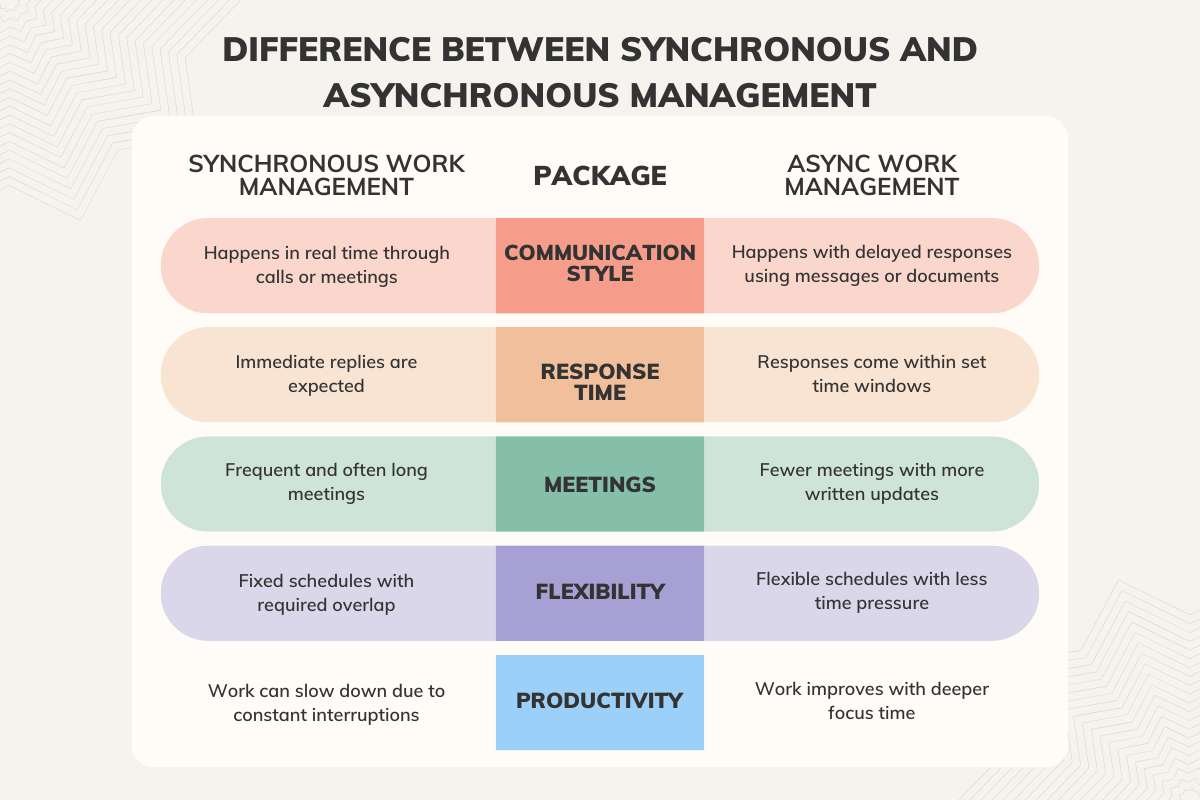
Both styles shape how teams communicate and make decisions. One depends on real-time interaction. The other allows people to respond on their own schedule. The table below highlights the key differences.
| Synchronous Work Management | Aspect | Async Work Management |
| Happens in real time through calls or meetings | Communication Style | Happens with delayed responses using messages or documents |
| Immediate replies are expected | Response Time | Responses come within set time windows |
| Frequent and often long meetings | Meetings | Fewer meetings with more written updates |
| Fixed schedules with required overlap | Flexibility | Flexible schedules with less time pressure |
| Work can slow down due to constant interruptions | Productivity | Work improves with deeper focus time |
Read More: Asynchronous vs Synchronous Work: Which Work Style Drives Higher Productivity in 2026?
What are the different types of asynchronous management?
Teams use different styles based on their goals and size. Each type supports flexibility in its own way. Here are the most common forms used in modern teams.
- Fully Async Management: Teams work without fixed hours. Communication happens through messages, updates, and shared documents. People respond based on their own schedule. This works well for global teams.
- Partially Async Management: Teams mix async work with some real-time meetings. Important discussions may happen live. Daily tasks and updates stay async. This is common in growing companies.
- Tool-Driven Async Management: Work depends on tools like project boards and shared docs. Teams track tasks, updates, and progress in one place. Communication stays structured and easy to follow.
- Documentation First Management: Teams focus on writing everything down. Decisions, plans, and updates live in shared documents. This reduces confusion and keeps everyone aligned without meetings.
How to implement async work management?
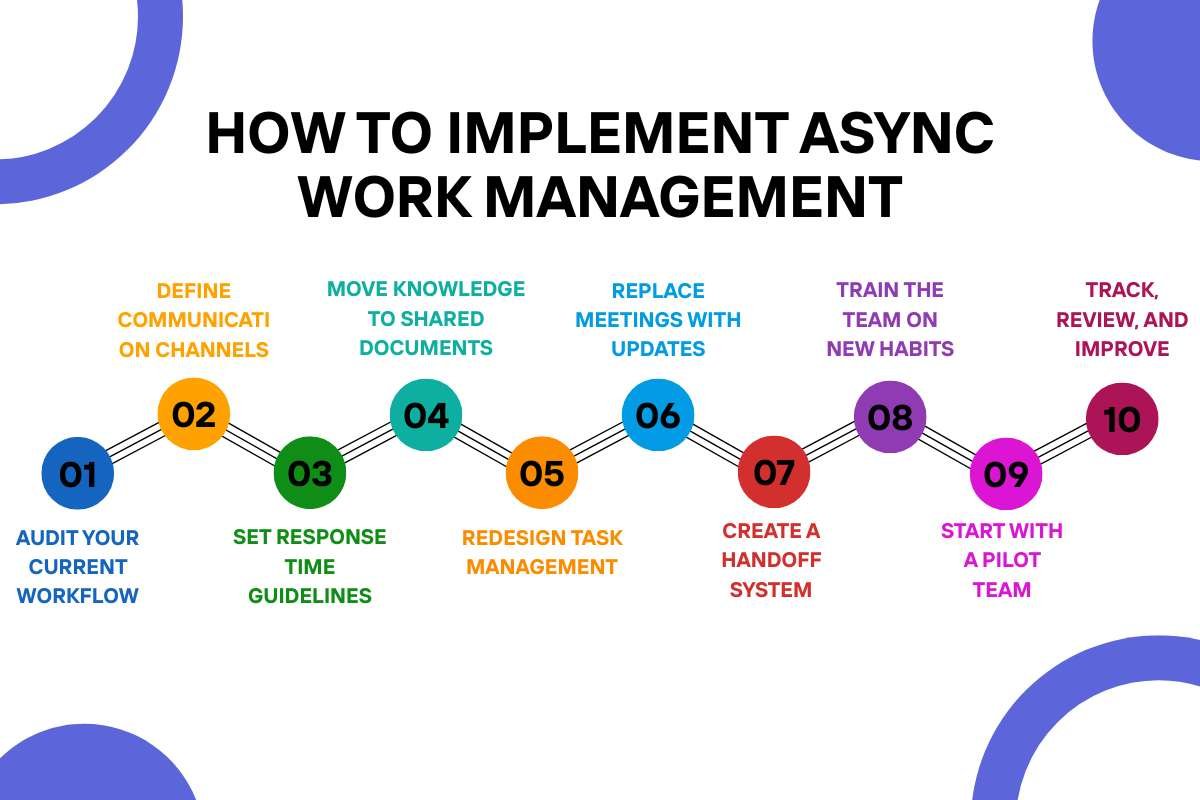
Steps to implement async work:
- Audit your current workflow
- Define communication channels
- Set response time guidelines
- Move knowledge to shared documents
- Redesign task management
- Replace meetings with updates
- Create a handoff system
- Train the team on new habits
- Start with a pilot team
- Track, review, and improve
Asynchronous management starts with understanding how work flows today. Teams often rely on meetings, quick chats, and scattered tools. This creates delays and repeated questions. By auditing the workflow, leaders can spot gaps and remove noise. Once this is clear, teams must assign a purpose to each channel. Chat should handle quick updates, while documents should hold detailed work and decisions. This simple split brings clarity and reduces confusion.
Next, teams need to remove the pressure of instant replies. Setting response time guidelines helps people focus without stress. Work becomes calmer and more planned. At the same time, all key knowledge must move into shared documents. Plans, processes, and decisions should live in one place. This creates a reliable source that anyone can access without asking.
Task management also needs a reset. Work should sit on a shared board with clear owners and deadlines. Each task should be small and easy to track. This makes progress visible and reduces follow-ups. Meetings should then shrink. Teams can replace many of them with short written or recorded updates. This saves time and keeps everyone aligned.
As teams grow, handoffs become important. A simple system helps work move from one person to another without delay. Clear updates at the end of the day make this possible. To support all this, teams need training. People must learn how to write clearly, document work, and share updates in a simple way.
It is best to test this system with one team first. A pilot helps leaders see what works in real conditions. Once the system feels stable, teams can expand it across the company. Even then, the process should not stay fixed. Regular reviews and feedback help teams improve over time. This steady approach builds a system that is simple, clear, and easy to scale.
10 tips to promote adoption among women leaders
Strong adoption needs intent and support. Many women leaders already manage complex workflows and teams. An asynchronous management style can give them more control and flexibility. The tips below help drive wider adoption in a practical way.
- 1. Design for Non-Linear Workdays: Flexible schedules help women leaders manage shifting daily demands. Work can happen in focused blocks instead of fixed hours. This supports consistency without added stress.
- 2. Reduce Visibility Bias Through Written Work: Meetings often reward those who speak the most. Written updates create a clear record of ideas and impact. This ensures contributions are seen and valued.
- 3. Support Re-Entry After Career Breaks: Returning leaders can catch up faster with strong documentation. They can review decisions and processes without long handovers. This builds confidence and speeds up progress.
- 4. Limit Late-Hour Leadership Pressure: Global roles often demand odd-hour meetings. Async systems reduce this need. Leaders can guide teams without stretching their day.
- 5. Enable Thoughtful Decision-Making: Some leaders prefer time to reflect before responding. Written workflows allow this space. It leads to clearer and more balanced decisions.
- 6. Strengthen Boundary Setting: Clear response windows help leaders protect their time. This reduces the pressure to always be available. It supports focus and well-being.
- 7. Remove Interruption Barriers: Meetings can include interruptions or overlaps. Written communication removes this issue. Leaders can share ideas without disruption.
- 8. Expand Access to Leadership Roles: Leaders do not need to attend every meeting to contribute. Async systems allow steady involvement in decisions. This improves access to leadership opportunities.
Case study: asynchronous management at CIO Women Magazine
➤ The background
We operate as a global business magazine. We work with leaders, brands, and contributors across regions. This creates a constant need to manage clients in different time zones.
➤ The challenge
The team faced delays due to time gaps. Clients were not always available at the same time. Real-time meetings became hard to schedule. This slowed approvals, content flow, and communication.
➤ The approach
Teams used written communication, shared documents, and structured updates. Client inputs, edits, and approvals were handled through documented systems instead of live calls. This reduced dependency on overlapping hours.
We also built a strong time zone tracking system. Each client’s working hours were mapped clearly. Teams scheduled tasks and deadlines based on local time, not their own. This avoided delays and unrealistic expectations
➤ The outcome
The company improved turnaround time and client satisfaction. Projects moved faster without constant scheduling. Teams worked with more flexibility and less stress. The system also allowed the company to scale globally without adding meeting overload.
Read More: Async Work Implementation Mistakes to Avoid
What are the challenges of asynchronous management?

Shifting to a different way of working sounds simple on paper, but the reality often feels uneven at first. Teams used to quick replies may struggle with the silence. Without instant feedback, people can feel unsure about progress or decisions. That adjustment takes time and clear expectations.
Clarity becomes a daily discipline. When updates are vague or incomplete, work slows down instead of speeding up. Every message needs context, intent, and direction. This can feel like extra effort in the beginning, especially for teams not used to documenting their thinking.
Time zones also add a layer of complexity. While they create flexibility, they can stretch timelines if handoffs are not planned well. A missed detail in one update can delay the next step by hours. Coordination needs to be intentional to avoid these gaps.
There is also the challenge of maintaining a connection. Fewer real time interactions can make collaboration feel distant. Without regular touchpoints, teams may lose the sense of alignment and shared energy that comes from live discussions.
Finally, not every task fits this model. Urgent issues, quick decisions, and sensitive conversations still need immediate attention. Knowing when to switch between different modes of communication becomes just as important as adopting a new one.
Conclusion:
A message sent at the right time can move work forward. A message sent at the wrong time can interrupt deep focus. Most teams live somewhere between those two extremes, reacting more than they realize.
When you step back and rethink how communication flows, a quieter kind of efficiency starts to take shape. Updates become clearer, decisions feel more deliberate, and people stop racing the clock just to stay visible. Asynchronous management fits into this shift as a way to work with time instead of against it. It gives teams room to think, respond with purpose, and build momentum without constant noise.
FAQs
What is asynchronous work culture?
It is a setup where people do not need to reply instantly. Work moves through documented updates, recorded inputs, and flexible response times.
Which one is better, synchronous or asynchronous?
Neither is better in all cases. Real time works best for urgent or complex discussions. Delayed communication works better for focus, clarity, and distributed teams.
When should a team use asynchronous management?
It works best for tasks that need deep thinking, written clarity, or collaboration across different time zones.
Thank You For Reading!
Know more
How Asynchronous Work Culture in the US Is Transforming Careers for Women?