
If you want to master how to pitch sustainability initiatives, remember that a great idea isn’t enough. Decision-makers want to see measurable business value: cost savings, risk reduction, operational efficiency, stakeholder trust, and long-term growth.
The business case has never been stronger. KPMG reports that 96% of the world’s largest 250 companies publish sustainability reports, while McKinsey research shows organizations with diverse leadership are more likely to outperform on ESG outcomes. Today, investors, customers, employees, and regulators expect measurable environmental and financial impact.
Understanding how to pitch sustainability initiatives means positioning sustainability as a competitive advantage, not a compliance exercise. The strongest proposals connect sustainability to growth, resilience, innovation, and customer loyalty.
Many purpose-driven, women-led businesses already follow this model by embedding sustainability into everyday decisions rather than treating it as a separate ESG initiative. This reflects how women driving sustainable business are aligning profitability with long-term impact.
In this guide, you’ll learn how to pitch sustainability initiatives through practical frameworks, compelling business cases, and persuasive strategies that turn sustainability into a strategic investment.
Why Business Value Wins Executive Buy-In
Learning how to pitch sustainability initiatives starts with one principle: position sustainability as a strategic investment, not an added cost. Executives want to know how it drives growth, improves efficiency, reduces risk, and creates long-term value.
The strongest sustainability pitches link every recommendation to measurable business outcomes: cost savings, operational resilience, customer trust, regulatory readiness, employee engagement, and competitive advantage. This shifts the conversation from compliance to opportunity.
A clear sustainability strategy for your company helps translate these goals into actionable initiatives. By aligning environmental priorities with business objectives, organizations can improve efficiency, strengthen resilience, and create measurable long-term value.
Many purpose-driven, women-led businesses already take this approach by embedding sustainability into everyday operations rather than treating it as a separate ESG initiative. Their focus on long-term resilience, stakeholder value, and innovation often leads to stronger business and sustainability outcomes. This reflects how women-led businesses approach sustainability differently, aligning long-term growth with measurable environmental and social impact.
Traditional Sustainability Pitch vs. Value-Driven Sustainability Pitch
| Traditional Pitch | Value-Driven Pitch Inspired by Purpose-Driven Businesses |
| Focuses on compliance and regulations | Focuses on business growth, resilience, and competitive advantage |
| Emphasizes environmental benefits alone | Connects environmental, social, and financial outcomes |
| Positions sustainability as an added cost | Demonstrates long-term ROI and operational efficiency |
| Uses carbon metrics as the primary success indicator | Combines ESG metrics with revenue, productivity, retention, and risk indicators |
| Appeals mainly to sustainability teams | Aligns with the priorities of executives, finance leaders, HR, operations, and investors |
Reframing Your Pitch for Executive Buy-In
Before presenting any sustainability initiative, ask yourself one critical question:
Would this proposal still be compelling if the word “sustainability” were removed?
If the answer is no, your pitch likely needs stronger business alignment.
For example, instead of saying:
“We should invest in sustainable packaging because it’s better for the environment.”
Reframe it as:
“Investing in sustainable packaging can reduce material waste, improve supply chain efficiency, strengthen our brand with environmentally conscious consumers, and help us stay ahead of evolving regulations.”
The initiative hasn’t changed, but the value proposition has. That’s the difference between a proposal that struggles for approval and one that earns executive support.
When professionals learn how to pitch sustainability initiatives, they realize that leaders rarely choose between purpose and profit. They invest in initiatives that clearly demonstrate both. By connecting sustainability to innovation, resilience, operational excellence, and measurable business outcomes, you create a proposal that aligns with executive priorities and builds confidence in long-term value creation.
How to Build the Pitch: Operational Strategies That Leadership Will Support
Once you’ve reframed sustainability as a strategic investment, the next challenge is deciding what to pitch. A common mistake organizations make when learning how to pitch sustainability initiatives is presenting sustainability as a broad vision with ambitious goals but few actionable details. Executives aren’t looking for generic commitments; they’re looking for initiatives that solve business problems, deliver measurable outcomes, and can be implemented with confidence.
This is where purpose-driven, women-led businesses offer valuable lessons. Rather than treating sustainability as a standalone ESG program, many integrate it into core business operations, ensuring every initiative creates both environmental impact and measurable business value. Understanding how to pitch sustainability initiatives means adopting the same business-first mindset, where every recommendation supports organizational priorities while delivering tangible results.
1. Pitch Supply Chain Improvements as a Risk and Growth Strategy
Supply chains sit at the heart of every business, making them one of the most effective places to introduce sustainability initiatives.
Instead of focusing solely on ethical sourcing or reducing emissions, explain how these initiatives can strengthen the business by:
- Reducing supplier and procurement risks
- Improving supply chain resilience against disruptions
- Increasing transparency and regulatory readiness
For example, switching to certified or locally sourced suppliers isn’t simply an environmental decision. It can shorten lead times, improve supplier accountability, reduce transportation costs, and minimize exposure to future geopolitical or regulatory disruptions.
Professionals who understand how to pitch sustainability initiatives emphasize these operational and financial advantages first. When executives see sustainability reducing uncertainty and improving business resilience, they’re far more likely to support the proposal.
2. Pitch Employee-Centric Sustainability as a Business Performance Initiative
Sustainability extends beyond environmental practices; it also includes creating workplaces where people can thrive.
As organizations expand their sustainability functions, many professionals compare social impact careers vs corporate sustainability roles to identify where they can create the greatest business and societal value.
Rather than positioning flexible work policies, diversity initiatives, or employee well-being programs as HR improvements, connect them directly to measurable business outcomes.
Show how these initiatives can:
- Improve employee retention and reduce hiring costs
- Increase productivity and engagement
- Strengthen employer branding
Many of today’s most influential sustainability strategies have also been shaped by women in climate policy and environmental advocacy, whose leadership has helped businesses align corporate goals with broader environmental and social priorities.
Purpose-driven, women-led organizations consistently view people as one of their most valuable long-term investments. Their approach demonstrates that investing in employees isn’t merely socially responsible; it’s a proven strategy for building resilient, high-performing businesses.
When discussing people-focused initiatives, how to pitch sustainability initiatives becomes less about promoting ESG goals and more about demonstrating how sustainability strengthens organizational performance through its greatest asset, its people.
3. Pitch Circular Economy Initiatives as Cost Optimization
One of the easiest ways to gain executive support is to demonstrate how sustainability improves efficiency.
Circular economy initiatives such as reducing waste, reusing materials, extending product lifecycles, and improving resource utilization offer a clear financial advantage alongside environmental benefits.
When presenting these ideas, emphasize outcomes like:
- Lower operating and disposal costs
- Improved material efficiency
- Reduced dependence on volatile raw material prices
Instead of saying, “We should recycle more,” explain how recovering valuable materials can lower procurement costs and improve profitability over time.
This shifts the conversation from environmental responsibility to operational excellence. Organizations looking to scale these efforts can adopt circular economy business models that transform waste reduction into improved resource efficiency, cost savings, and new revenue opportunities.
Bring It All Together With a Unified Business Case

Whether you’re proposing a more resilient supply chain, employee-focused sustainability initiatives, or circular business practices, your proposal should always answer one essential question:
How does this initiative help the organization perform better?
Every recommendation should connect directly to a measurable business outcome, including:
- Reducing operational costs
- Mitigating business risks
- Improving efficiency
- Attracting and retaining top talent
- Strengthening customer trust
- Increasing long-term profitability
When sustainability is positioned as a business enabler instead of an isolated ESG objective, leadership is far more likely to recognize its strategic importance and invest in implementation.
Ultimately, how to pitch sustainability initiatives isn’t about presenting the most ambitious environmental vision. It’s about building a compelling business case that demonstrates measurable value, practical execution, and long-term organizational impact.
Data Mastery: Pitching Metrics Beyond Carbon
A strong sustainability initiative doesn’t succeed on vision alone; it succeeds on evidence. Once you’ve demonstrated where sustainability creates business value, the next step is proving how that value will be measured. This is often the deciding factor between a proposal that gains executive approval and one that gets pushed aside.
One of the biggest mistakes professionals make while learning how to pitch sustainability initiatives is relying solely on carbon reduction metrics. While emissions data remains important, today’s leaders expect a broader view of business performance. They want to understand how a sustainability initiative will improve efficiency, reduce risk, strengthen the workforce, and create measurable long-term value.
That’s why the most persuasive sustainability pitches combine environmental, social, and governance (ESG) metrics with financial and operational KPIs to create a single, compelling business case.
1. Focus on Metrics That Matter to Leadership
Different stakeholders evaluate success differently. A CFO may prioritize cost savings and return on investment, while HR leaders focus on employee retention and engagement. Operations teams look for efficiency gains, and investors increasingly expect transparent ESG reporting alongside financial performance. Effective corporate sustainability reporting helps organizations communicate measurable progress, improve transparency, and build trust with key stakeholders.
Effective sustainability proposals become even more impactful when supported by strong corporate sustainability reporting, helping organizations communicate measurable progress to investors, regulators, and other stakeholders.
Instead of presenting sustainability metrics in isolation, connect them to business outcomes.
| Sustainability Metric | Why It Matters to Decision-Makers |
| Carbon emissions reduction | Demonstrates regulatory readiness and environmental progress |
| Energy and resource efficiency | Lowers operational costs and improves productivity |
| Employee retention and engagement | Reduces recruitment costs and strengthens organizational performance |
| Supplier diversity and ethical sourcing | Builds supply chain resilience and reduces procurement risks |
| Waste reduction and material recovery | Improves resource efficiency and lowers disposal costs |
| Community and social impact | Enhances brand reputation and stakeholder trust |
| Governance and ESG reporting | Increases investor confidence and supports long-term business resilience |
Choosing the right measurements is essential for proving business value. A deeper understanding of sustainability KPIs can help organizations track progress across environmental, operational, financial, and workforce performance.
Understanding how to pitch sustainability initiatives also means understanding your audience. Presenting metrics that reflect leadership priorities makes your proposal significantly more relevant and persuasive.
Turn Data Into a Business Story
Metrics alone rarely persuade decision-makers. The real impact comes from explaining what those numbers mean for the business.
For example, instead of saying:
“This initiative will reduce waste by 25%.”
Say:
“Reducing waste by 25% can lower disposal costs, improve resource utilization, and generate annual operational savings while supporting our sustainability commitments.”
Likewise, instead of highlighting improved employee engagement scores, explain how greater engagement contributes to lower turnover, stronger productivity, improved collaboration, and higher business performance.
This approach transforms data from a collection of statistics into a compelling business narrative that resonates with decision-makers.
Professionals who excel at how to pitch sustainability initiatives understand that leaders rarely invest in numbers alone; they invest in the business outcomes those numbers represent.
2. Build Credibility Through Transparent Measurement
Executives are more likely to support initiatives when they know progress can be tracked consistently. Before presenting your proposal, define:
- The baseline performance today
- The KPIs that will measure success
- The timeline for achieving results
- How progress will be monitored and reported
- The expected business and ESG outcomes
Clear measurement frameworks reduce uncertainty and make sustainability initiatives easier to evaluate, refine, and scale over time.
Remember: Data Builds Confidence
Every sustainability initiative tells a story, but data gives that story credibility. When you move beyond carbon metrics and demonstrate measurable improvements in operational efficiency, cost optimization, workforce performance, supply chain resilience, governance, and long-term value creation, your proposal becomes much more than an environmental recommendation. It becomes a strategic investment supported by measurable evidence.
Ultimately, mastering how to pitch sustainability initiatives means proving that success can be measured just as clearly as financial performance. When executives see transparent metrics, credible reporting, and meaningful business outcomes, they’re far more likely to approve and champion your proposal.
Overcoming Pitch Objections: Turn Skepticism Into Executive Buy-In
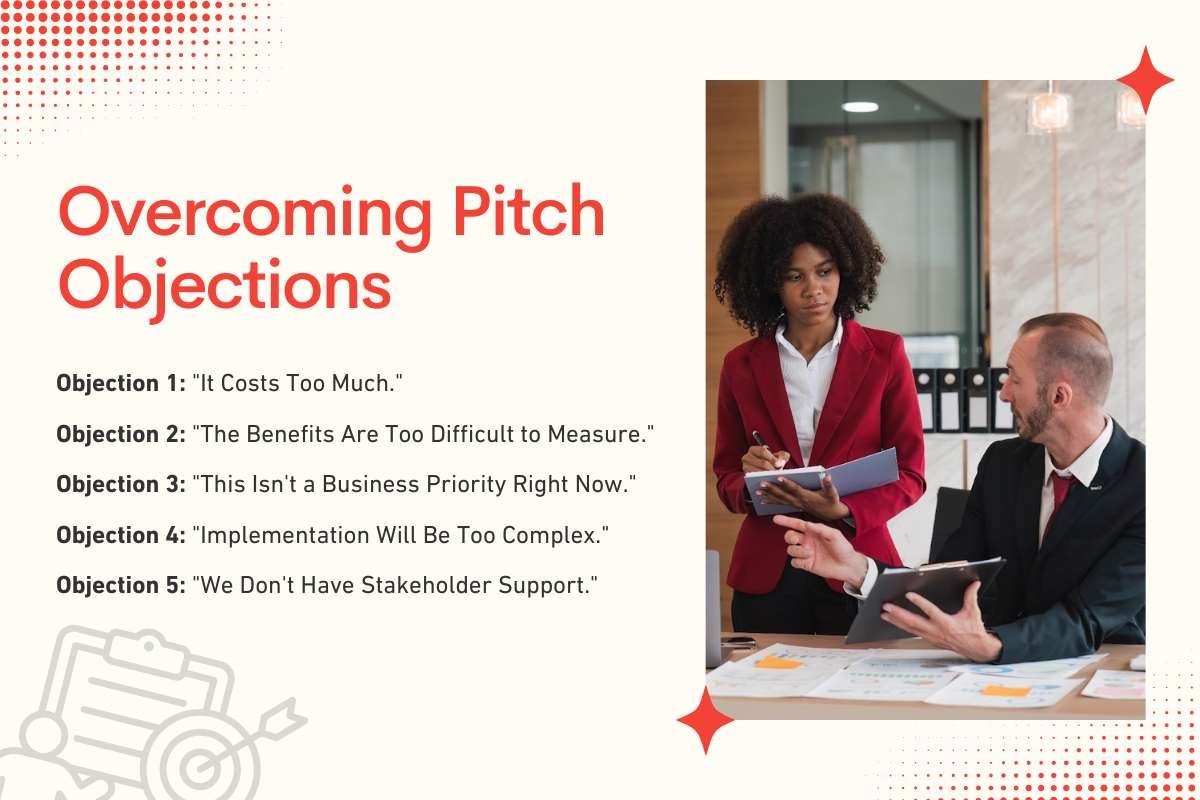
Even the strongest sustainability proposal will face challenging questions. Budget constraints, competing priorities, uncertain returns, and implementation complexity are among the most common concerns raised by decision-makers. The difference between a rejected proposal and an approved one often comes down to how confidently and strategically you respond.
One of the most valuable lessons in how to pitch sustainability initiatives is recognizing that executive objections aren’t signs of resistance; they’re opportunities to strengthen your business case. Rather than defending sustainability as a moral responsibility, use every concern as a chance to demonstrate measurable business value.
Purpose-driven, women-led businesses frequently overcome similar challenges, particularly when scaling sustainability initiatives with limited resources. Their success comes from reframing objections around long-term business performance, operational resilience, and strategic growth.
Here are the most common objections and how to respond effectively.
Objection 1: “It Costs Too Much.”
For many decision-makers, the upfront investment is the biggest hurdle. Instead of denying the costs, acknowledge them and shift the conversation toward return on investment (ROI).
Show how the initiative can:
- Reduce operational expenses through energy or resource efficiency
- Lower waste management and procurement costs
- Minimize regulatory and compliance risks
Supporting your proposal with projected savings, payback periods, or benchmarking data makes the investment easier to justify.
Professionals who understand how to pitch sustainability initiatives know that financial discussions should focus on value creation rather than expenditure. When leaders see sustainability as an investment instead of an expense, approval becomes much more likely.
Objection 2: “The Benefits Are Too Difficult to Measure.”
If leaders can’t measure success, they’re unlikely to approve the initiative.
Address this concern by presenting a clear measurement framework that includes:
- Defined baseline metrics
- Short- and long-term KPIs
- Regular reporting milestones
Demonstrating how progress will be tracked builds confidence and reduces uncertainty.
Objection 3: “This Isn’t a Business Priority Right Now.”
Competing initiatives often push sustainability lower on the agenda. Instead of arguing that sustainability deserves separate attention, show how it supports existing business priorities.
For example, explain how your proposal contributes to:
- Cost optimization
- Operational resilience
- Talent attraction and retention
When sustainability aligns with the organization’s strategic objectives, it becomes much harder to dismiss.
Objection 4: “Implementation Will Be Too Complex.”
Leaders often worry that sustainability initiatives will disrupt operations or require significant organizational change.
Ease these concerns by breaking the initiative into manageable phases:
- Launch a pilot project.
- Measure early results.
- Refine the approach based on feedback.
- Scale gradually across the organization.
Breaking the initiative into manageable stages demonstrates that risks are controlled, resources are used efficiently, and progress remains measurable.
Understanding how to pitch sustainability initiatives also means reducing perceived risk. A practical implementation roadmap reassures leadership that the initiative can be introduced without disrupting business operations.
Objection 5: “We Don’t Have Stakeholder Support.”
Even a well-designed initiative can struggle without internal alignment.
Build support before the formal presentation by identifying key stakeholders and tailoring your message to their priorities:
- CFO: Focus on ROI, cost savings, and financial resilience.
- HR Leaders: Highlight employee engagement, retention, and employer branding.
- Operations Teams: Emphasize efficiency, productivity, and risk reduction.
- Executives and Investors: Connect the initiative to long-term growth, ESG performance, and competitive advantage.
When stakeholders see how the initiative supports their goals, gaining consensus becomes significantly easier.
The Best Response Is Preparation
Executive objections shouldn’t be viewed as roadblocks; they’re opportunities to strengthen your proposal before it reaches the boardroom.
By anticipating concerns around cost, complexity, measurement, implementation, and strategic relevance, you demonstrate that your initiative has been evaluated from both a sustainability and business perspective. This preparation builds trust, reduces perceived risk, and significantly improves the likelihood of securing executive approval.
Ultimately, mastering how to pitch sustainability initiatives isn’t about avoiding difficult questions. It’s about answering them with credible evidence, practical solutions, measurable outcomes, and a compelling vision for long-term business value.
Step-by-Step Guide: How to Pitch Sustainability Initiatives Effectively
At this stage, you’ve learned how to position sustainability as a business opportunity, support your proposal with meaningful data, and confidently address executive concerns. The final step in how to pitch sustainability initiatives is bringing these elements together into a structured, persuasive presentation that inspires action.
Rather than overwhelming stakeholders with technical ESG terminology or ambitious long-term visions, build a narrative that answers one critical question:
Why should the organization invest in this initiative now?
The following framework will help you develop a sustainability pitch that resonates with executives, investors, and cross-functional teams while demonstrating measurable business value.
Step 1: Align the Initiative With Business Goals
Every successful pitch starts with business alignment. Before discussing environmental or social impact, identify the organizational challenge your initiative will solve.
Ask yourself:
- Will it reduce operating costs?
- Will it improve supply chain resilience?
- Will it help attract and retain talent?
- Will it strengthen customer trust?
- Will it prepare the business for future regulations?
When sustainability directly supports strategic priorities, it becomes a business initiative, not just an ESG initiative.
Professionals who master how to pitch sustainability initiatives consistently begin with business objectives rather than sustainability objectives. This immediately establishes relevance and demonstrates strategic thinking.
Step 2: Tailor Your Message to Your Audience
Different stakeholders have different priorities. A one-size-fits-all presentation rarely succeeds.
Customize your pitch based on who is in the room:
| Stakeholder | What They Want to Hear |
| CFO | Cost savings, ROI, financial resilience |
| CEO | Competitive advantage, long-term growth, innovation |
| HR Leaders | Employee engagement, retention, employer brand |
| Operations Teams | Efficiency, risk reduction, productivity |
| Investors & Board Members | ESG performance, governance, long-term value creation |
Speaking the language of your audience significantly increases the likelihood of gaining support.
Step 3: Present Clear, Measurable Goals
Avoid vague commitments like “becoming more sustainable.” Instead, define measurable objectives that demonstrate accountability.
For example:
- Reduce operational waste by 20% within two years.
- Increase procurement from certified sustainable suppliers.
- Improve employee engagement through well-being initiatives.
Specific goals make your proposal more credible and easier to evaluate.
Step 4: Back Every Claim With Evidence
Decision-makers expect more than good intentions; they expect proof.
Support your proposal with:
- Industry research and benchmarking
- Internal business data
- Financial projections
Understanding how to pitch sustainability initiatives also means recognizing that evidence creates credibility. Every business claim should be supported by measurable data or real-world examples that strengthen executive confidence.
Step 5: Define How Success Will Be Measured
Approval is only the beginning. Executives also want to understand how progress will be tracked after implementation.
Outline:
- The KPIs you’ll monitor
- Reporting frequency
- Expected milestones
A transparent measurement plan reassures stakeholders that the initiative can be evaluated and refined over time.
Step 6: End With a Clear Call to Action
A compelling pitch doesn’t end with data; it ends with direction.
Instead of concluding with broad aspirations, clearly state what you’re asking for, whether it’s:
- Approval for a pilot program
- Budget allocation
- Cross-functional collaboration
Ultimately, how to pitch sustainability initiatives isn’t just about presenting compelling ideas; it’s about giving decision-makers a clear path forward. A strong call to action transforms a persuasive presentation into an initiative that leadership is ready to support.
The Future of Sustainable Business: Why the Best Time to Pitch Is Now

The business landscape is evolving rapidly, and sustainability is no longer a future consideration; it’s a present-day business imperative. What was once viewed as a corporate social responsibility initiative has become a strategic priority shaped by changing regulations, rising investor expectations, technological innovation, and evolving consumer preferences.
These shifts also reflect the broader evolution of sustainable business in 2025, where organizations increasingly integrate ESG into innovation, governance, operations, and long-term growth strategies.
For professionals learning how to pitch sustainability initiatives, this shift presents a significant opportunity. Organizations that act today are better positioned to manage future risks, unlock new growth opportunities, strengthen resilience, and build a lasting competitive advantage.
1. AI Is Transforming Sustainability Reporting
Artificial intelligence is making sustainability data more accessible, accurate, and actionable. Businesses are increasingly using AI-powered tools to automate ESG reporting, monitor emissions, optimize energy consumption, and identify inefficiencies across operations.
For decision-makers, this means sustainability is becoming easier to measure and manage. When presenting an initiative, highlighting how technology can simplify reporting and improve decision-making can strengthen your business case and address concerns around implementation complexity.
2. Regulations Are Raising the Bar
Governments and regulators around the world are introducing more comprehensive sustainability disclosure requirements. Businesses are expected to provide greater transparency around environmental, social, and governance performance, making proactive sustainability planning more important than ever.
Rather than positioning sustainability initiatives as a response to compliance, frame them as an opportunity to stay ahead of regulatory changes, reduce future risks, and avoid costly last-minute adaptations.
Organizations often evaluate whether formal certifications or structured reporting frameworks best support their sustainability goals. Understanding B Corp certification vs ESG reporting can help businesses choose the right approach for long-term credibility and compliance.
3. Consumers Are Rewarding Responsible Businesses
Today’s consumers increasingly consider sustainability when making purchasing decisions. They expect brands to demonstrate transparency, ethical practices, and measurable environmental and social impact, not just marketing claims.
For businesses, this creates a competitive advantage. Sustainability initiatives can strengthen customer trust, enhance brand reputation, and differentiate organizations in increasingly crowded markets. When pitching your proposal, connect these outcomes to long-term revenue growth and customer loyalty.
4. Investors Continue to Prioritize Long-Term Value
Investors are placing greater emphasis on how businesses manage environmental and social risks alongside financial performance. This shift is also expanding opportunities in green finance careers for women, as professionals help direct capital toward sustainable projects, climate solutions, and responsible investment strategies. Organizations with well-defined sustainability strategies are often better positioned to demonstrate resilience, governance, and long-term value creation.
By showing how your initiative supports transparent reporting, risk management, and sustainable growth, you position it as an investment in the organization’s future, not simply an operational improvement.
As sustainable investing gains momentum, organizations are increasingly seeking professionals with ESG and sustainable finance expertise. ESG careers for women are playing a growing role in advancing corporate sustainability.
Green jobs and sustainability roles are expanding in areas such as ESG strategy, renewable energy, climate innovation, and sustainable business management, enabling professionals to contribute to meaningful environmental and social impact.
5. Sustainability Will Define the Next Generation of Business Leaders
Tomorrow’s market leaders won’t be the organizations that treat sustainability as a separate department or annual reporting exercise. They’ll be the ones that integrate sustainability into innovation, operations, workforce strategy, supply chains, customer experience, and long-term business planning.
Purpose-driven, women-led businesses already provide a compelling blueprint for this approach. Their ability to align sustainability with operational excellence, employee well-being, customer trust, and financial resilience demonstrates that sustainable growth and business performance can reinforce one another.
For anyone seeking to understand how to pitch sustainability initiatives, the message is clear: executive conversations have evolved. Leadership is no longer asking whether sustainability matters; they’re asking how it will create measurable business value.
The organizations that answer that question with credible evidence, practical implementation plans, and measurable outcomes will be the ones best positioned to lead in the years ahead.
Conclusion:
Knowing how to pitch sustainability initiatives is no longer optional; it’s a strategic business capability. As regulations tighten, investor expectations evolve, and customer priorities continue to shift, sustainability has become a key driver of resilience, innovation, operational excellence, and long-term growth.
The most persuasive proposals don’t focus solely on environmental impact. Instead, they connect sustainability to measurable business outcomes such as cost savings, risk reduction, operational efficiency, employee engagement, stronger governance, and competitive advantage.
Purpose-driven, women-led businesses consistently demonstrate the effectiveness of this approach by embedding sustainability into everyday business decisions rather than treating it as a separate ESG initiative. Their success illustrates that meaningful impact is achieved when sustainability aligns with broader business strategy and measurable organizational goals.
To understand how this broader leadership mindset is reshaping organizations, explore Women Driving Sustainable Business, where you’ll learn how female-led companies integrate sustainability into strategy, innovation, governance, and long-term value creation.
Ultimately, purpose and profit are not competing priorities; they are mutually reinforcing. Organizations that present sustainability as a strategic business opportunity, supported by credible evidence and a clear implementation roadmap, are far more likely to secure executive buy-in and create lasting value.
Frequently Asked Questions
1. What should a sustainability pitch include?
A strong sustainability pitch should clearly define the business challenge, present a practical solution, demonstrate both ESG and financial benefits, outline measurable KPIs, establish realistic timelines, and conclude with a clear call to action.
2. How do you convince leadership to invest in sustainability?
Position sustainability as a strategic business investment by demonstrating measurable cost savings, operational efficiency, risk reduction, competitive advantage, regulatory readiness, and long-term return on investment.
3. Why do sustainability initiatives get rejected?
Most proposals fail because they emphasize environmental impact without clearly demonstrating business value, financial returns, implementation feasibility, or alignment with organizational priorities.
4. What metrics should a sustainability pitch include?
Include both ESG and business metrics, such as carbon emissions, energy efficiency, waste reduction, cost savings, employee engagement, supplier performance, customer trust, operational resilience, and ROI.
5. How can businesses measure the success of sustainability initiatives?
Organizations should track predefined KPIs including energy use, emissions, waste reduction, cost optimization, employee engagement, ESG performance, and operational improvements through consistent monitoring, reporting, and continuous evaluation.