
Eliminate asynchronous operational friction by identifying structural errors. This guide details the core async work implementation mistakes to avoid, including over-reliance on real-time chat, missing communication SLAs, and tech sprawl. You gain an actionable guide to protect focus blocks, streamline documentation, and build a high-performing autonomous culture.
If you build a remote workspace using an office playbook, it collapses. Many executives believe that moving to a distributed framework means exchanging a physical desk for a digital chat room.
They keep the same real-time expectations, run the same sudden huddles, and demand constant availability. This quick-fix mindset backfires immediately. It fragments employee focus, breaking project pipelines, and driving talent toward burnout.
True non-linear productivity requires completely dismantling synchronous habits. To help your team maintain momentum across time zones, you must master the structural design of a remote culture.
This definitive blueprint exposes the exact async work implementation mistakes to avoid. It will also help build an autonomous, high-performing workforce that delivers measurable results.
Critical Async Pitfalls at a Glance
The quickest way to tank a remote team is to mandate asynchronous workflows without changing your communication culture. True async success requires structured documentation, measurable metrics, and trust in employee autonomy.
[The Ultimate Truth]
- Moving to async requires changing
- HOW you talk, not just where you type.
[The Critical Errors]
- Treating Slack like a live office chat.
- Keeping knowledge trapped in private DMs.
- Failing to set explicit response windows.
[The Value Lever]
- Clear documentation saves up to 32% of
- internal email and meeting overhead.
The hidden cost of the “Data visibility gap”
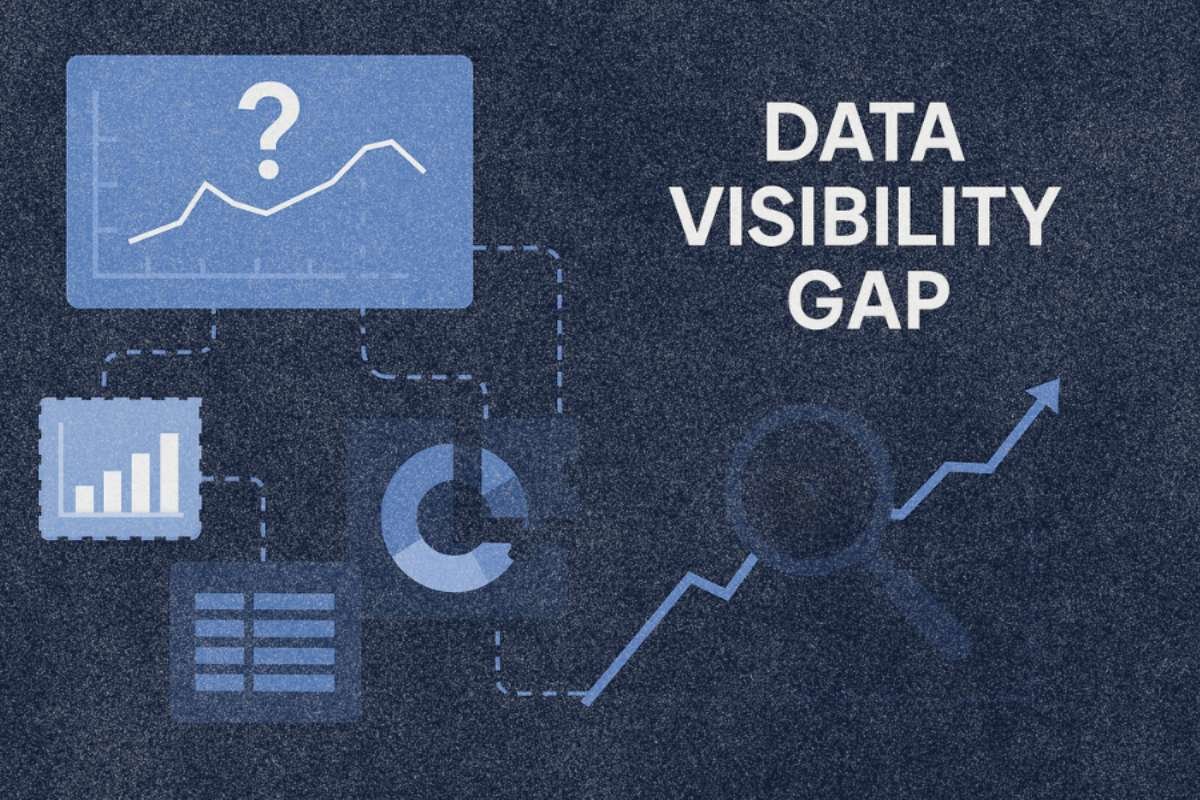
Most execution failures do not stem from bad intent. They happen because of a structural breakdown called the Data Visibility Gap.
In an office, context travels through ambient conversations. In a distributed environment, that context vanishes. When managers push tasks without documenting the “why,” the project stalls. Employees waste hours waiting for clarification across different time zones.
Data proves the scale of this problem. According to the official GitLab Remote Work Report, 50% of high-performing remote teams default to shared documents. They use live meetings only as a last resort. This discipline in documentation is one of the easiest ways to bypass the common async work implementation mistakes.
If your team constantly asks for clarification, your documentation lacks depth. You must build a low-context communication culture. Where every request includes background data, the final goal, and clear success criteria. Failing to establish this self-serve baseline is one of the primary mistakes to avoid when implementing async work if you want a self-sufficient workplace.
Read More: Why Does Asynchronous Management Works Better for Modern Teams?
Top 5 async work implementation mistakes to avoid in 2026
Transitioning a traditional operation into a functional, non-linear environment requires restructuring workflow mechanics. Many businesses stumble here. According to the Whimsical State of Async Report, 83% of professionals say they work better with asynchronous workflows. High-performing teams are 2.7 times more likely to have clear communication guidelines than struggling teams.
A lack of operational guidelines turns flexible work into a chaos of fragmented chats and delayed targets. Let us see the core async mistakes, with practical tips, detailed definitions, and tactical execution paths.
Treating instant messaging tools like live office spaces
This structural error tops the list of major async work implementation mistakes to avoid. It occurs when leaders take real-time, physical office behaviors and duplicate them inside digital communication hubs like Slack, Microsoft Teams, or Pumble.
Instead of using text as an asynchronous medium, teams treat chats as immediate face-to-face conversations. This mandates constant presence and forces workers to keep apps open all day.
The practical example
Imagine an engineering lead drafting a detailed system fix inside a public thread. Mid-sentence, an alert flashes: a team member pings, “Hey, quick question, are you free?” The engineering lead stops their focus work to reply. This minor interruption breaks their deep cognitive flow. The focus time is lost, and the original system document remains unfinished.
The data benchmark
Data reveals that knowledge workers average only 11.7 hours of deep focus per week, largely because in-office and real-time hybrid setups consume nearly half their time (43.4% to 49.2%) in constant real-time collaboration. This data emphasizes why treating text chat as a live bullpen is one of the costliest async work implementation mistakes to avoid.
Summarized Cons: Fragmented employee focus; induces cognitive fatigue; turns daily work into a reactive routine of answering pings instead of completing objectives.
[Counterproductive Real-Time Chat Cycle]
Ping Sent ──> Immediate Interruption ──> Context Switch ──> Focus Broken ──> 23-Min Recovery Cost
How to fix it today?
- Ditch the “Pre-Ping”: Ban introductory messages like “Hi” or “Got a second?” Train your workforce to deliver the entire context, the specific request, and the target deadline in a single, comprehensive message.
- Normalize Status Controls: Encourage your team members to close communication apps entirely during designated execution windows. Use custom status indicators (e.g., “Deep Work — Checking messages at 2 PM”) to manage expectations and steer clear of common async work implementation mistakes to avoid.
2. Failing to define explicit response windows
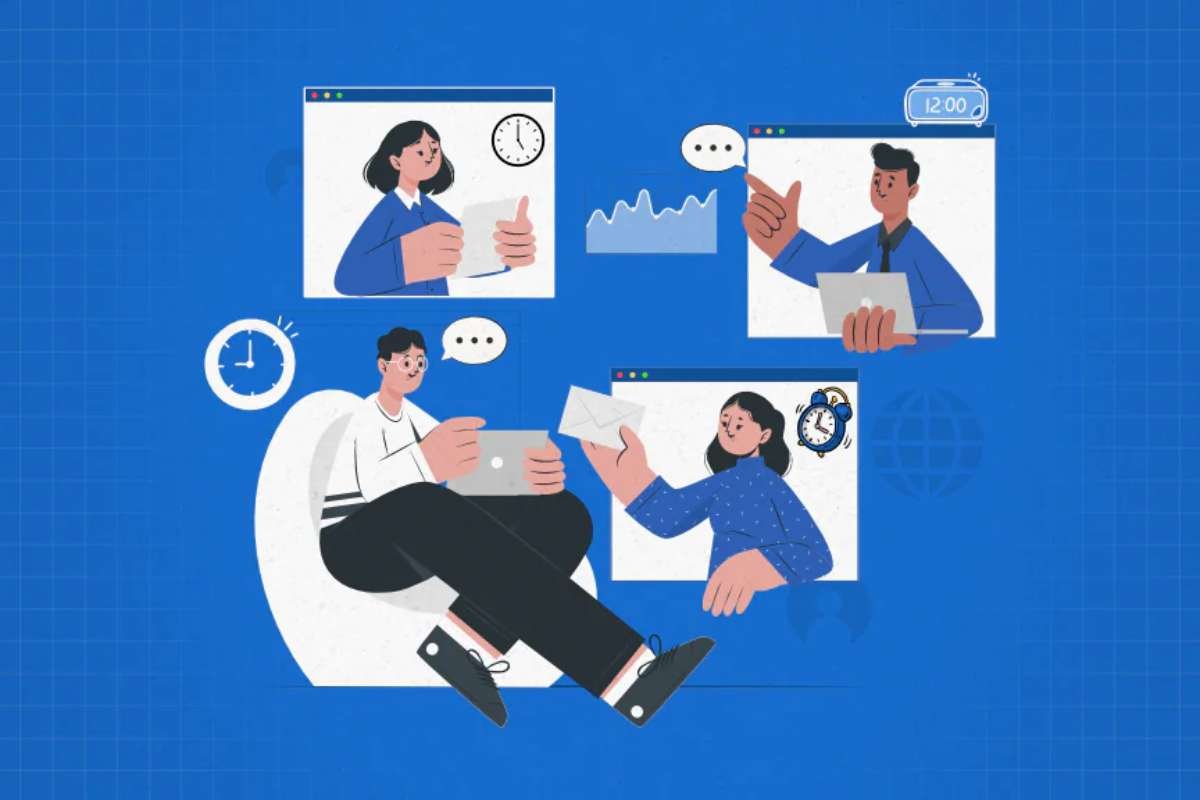
This operational gap stands out among the critical async work implementation mistakes to avoid. This mistake occurs when an organization removes real-time presence requirements but fails to establish alternative communication SLAs (Service Level Agreements).
Without stated rules on when a message requires a reply, employees fill the silence with anxiety, assuming they must respond immediately to look productive.
The practical example
A product manager drops a non-urgent design review into a shared channel at 7:30 PM. Because the leadership team has never defined response expectations, the UI designer feels pressured to halt their family dinner, log back into their laptop, and format a reply immediately to prove dedication.
Summarized Cons: Breeds toxic “always-on” micro-cultures; creates operational bottlenecks when blockers sit unanswered for days; accelerates team burnout.
Operational playbook: designing your team’s response matrix
To eliminate this ambiguity and sidestep typical async work implementation mistakes to avoid, implement a structured, transparent response grid. This standardizes when and where your team communicates based on urgency:
| Scenario / Urgency Level | Primary Channel | Stated SLA Target | Practical Execution Example |
| Emergency/Production Outage | Twilio SMS/Phone Call | Immediate (<15 Mins) | Server downtime or data security breach. |
| Active Project Blocker | Notion/Jira Task Thread | Within 4 Hours | Code review, blocking a scheduled deployment. |
| General Progress Updates | Slack/Pumble Channel | Within 24 Hours | Share a non-urgent design mockup review. |
| Long-Term Strategic Input | Shared Google Doc/Confluence | Within 48 Hours | Input on next quarter’s content roadmap. |
3. Keeping institutional knowledge trapped in private DMs
This error occurs when team members solve technical glitches, clarify project scopes, or alter business rules inside 1-on-1 private direct messages. Because this data remains hidden in private histories, it creates information silos across the wider team.
If you want a searchable corporate memory, isolating knowledge in 1-on-1 chats is one of the main async work implementation mistakes to avoid.
The practical example
A customer support agent discovers a workaround for a software bug and messages it to a colleague privately. Two days later, five other agents ran into the exact same bug. They waste collective hours troubleshooting it from scratch because the original solution remains hidden inside a private chat history.
Summarized Cons: Demands disciplined documentation habits; requires public editing; can feel slower initially than firing off a quick private DM.
[Documentation Driven Retrieval]
Issue Identified ──> Search Public Knowledge Base ──> Self-Solve in <5 Mins ──> Uninterrupted Momentum
How to fix it today?
- Apply the “Move to Public” Mandate: If an issue is resolved inside a private chat, require the owner to copy the conclusion into a public project thread or shared wiki immediately.
- Leverage Emoji Reactions: Adopt internal communication shortcuts to bypass routine data storage flaws, another one of the simple async work implementation mistakes to avoid. For instance, use a specific emoji reaction (like a book emoji) to flag a post. This tells an automated integration to copy that update directly into the team’s central knowledge repository.
4. Evaluating visibility and hours logged instead of actual output
This mistake represents a fundamental management failure. It occurs when leadership measures employee performance by screen presence, such as tracking green status dots or keystroke counts, rather than looking at objective, high-quality deliverables.
Relying on visibility triggers instead of production metrics is one of the most toxic async work implementation mistakes to avoid.
The practical example
An enterprise account manager completes their weekly sales reports by Thursday afternoon, hitting every performance target early. However, because their manager constantly audits active green dots, the manager assumes the employee is slacking off on Friday, ignoring the high-quality outcomes already delivered.
Summarized Cons: Encourages “presence theater” where employees wiggle mice to look active; rewards slow, performative habits over efficient execution.
How to fix it today?
- Shift to Async Standups: Replace live morning status meetings with structured, written check-ins. Have your team answer three simple questions inside project boards: What did you ship yesterday? What will you ship today? What are your active blockers?
- Transition to Strict Metrics Tracking: Evaluate your team using clear, objective numbers. Track metrics like task completion velocity, code deployment accuracy, closed tickets, or content words generated. If an employee hits their goals, their green status dot becomes irrelevant.
5. Overloading the tech stack (tool sprawl and context fragmentation)
This error occurs when an organization deploys too many digital tools without assigning a single, specific purpose to each one. This creates context fragmentation, forcing employees to spend their days searching through different platforms just to find basic project requirements.
The practical example
A marketing team discusses an upcoming campaign launch across four different spaces at the same time: brainstorming occurs on Miro, technical questions are answered via Email, deadlines are tracked on Monday.com, and immediate feedback is scattered inside a Slack channel. Important asset links get lost across these platforms, delaying the entire launch.
Summarized Cons: Requires a migration phase out of legacy platforms; demands strict enforcement of tool boundaries by management.
[Context Collapse] Miro + Email + Slack + Monday.com ──> Context Lost (Chaos)
[Source of Truth] Centralized Project Dashboard ──> Clear Execution Blueprint
How to fix it today?
- Enforce a Single Source of Truth Ruleset: Enforce a strict tool matrix. For example, if a task is not tracked on the primary project board, it does not exist.
- Audit and Consolidate Subscriptions: Audit your collaboration software quarterly. Eliminate overlapping platforms and consolidate team discussions into a single searchable tool architecture to ensure you dodge these common async work mistakes.
Real-world blueprint: the async evolution
Building a sustainable distributed workforce requires active cultural change. The data below illustrates the massive shift in corporate communication tools and user habits.
[ GLOBAL COLLABORATION SOFTWARE MARKET SHARE ]
■ Microsoft Teams: 55% (390M Daily Active Users)
■ Slack Technologies: 18.6%
■ Zoom Video Communications: 10%
■ Other Platforms: 16.4%
Consider the rapid rise of async video tools. According to the Atlassian Loom Platform Review, enterprise users recorded 88 million videos in a single year, effectively replacing 202 million synchronous meetings. This balance proves that concise, recorded updates convey deep technical context without requiring calendar invites.
FAQ:
1. How do you address accountability in an asynchronous work model?
Accountability relies entirely on transparent, quantifiable deliverables. Define the scope of work, establish explicit deadlines, and use centralized project management boards to track milestones. When everyone can see ownership lines, output speaks for itself.
2. What are the best tools to support an async team configuration?
Focus on tools that prioritize documentation and searchability. Use platforms like Notion, Basecamp, or Confluence for knowledge bases; GitHub, Jira, or Monday.com for project tracking; and Slack or Threads for non-urgent communication.
3. How do you prevent employee isolation in a fully async environment?
Separate operational tasks from social connections. Build dedicated spaces for casual interaction, such as non-work Slack channels, monthly voluntary virtual hangouts, or structured local meetups. Do not use business sync meetings to solve team loneliness.
4. What type of work is not suitable for asynchronous communication?
Asynchronous communication works poorly during high-stakes crises, urgent incident responses, sensitive personnel reviews, or creative brainstorming sessions. Use live video calls or synchronous meetings when you need immediate feedback loops.
References
- Atlassian. (2025). TEAM Q3 2025 shareholder letter. Atlassian Investor Relations.
- Bughin, J. (2012). Capturing business value with social technologies. McKinsey Global Institute. McKinsey & Company.
- Gaskin, J. E., & Skousen, T. (2016). Time-chunking and hyper-refocusing in a digitally-enabled workplace: Six forms of knowledge workers. Frontiers in Psychology, 7, Article 1627.
- GitLab. (2021). The GitLab remote work report: The state of remote work. GitLab Inc.
- Wafa, Y. (2026). Performance management for remote workers: Not “what are your employees doing?” but rather “how are your employees doing?” Preprints.
- Whimsical, Inc. (2024). The state of async report: Communication guidelines and collaborative mechanics. Whimsical Research.
Thank You For Reading!
See More
Asynchronous vs Synchronous Work: Which Work Style Drives Higher Productivity in 2026?