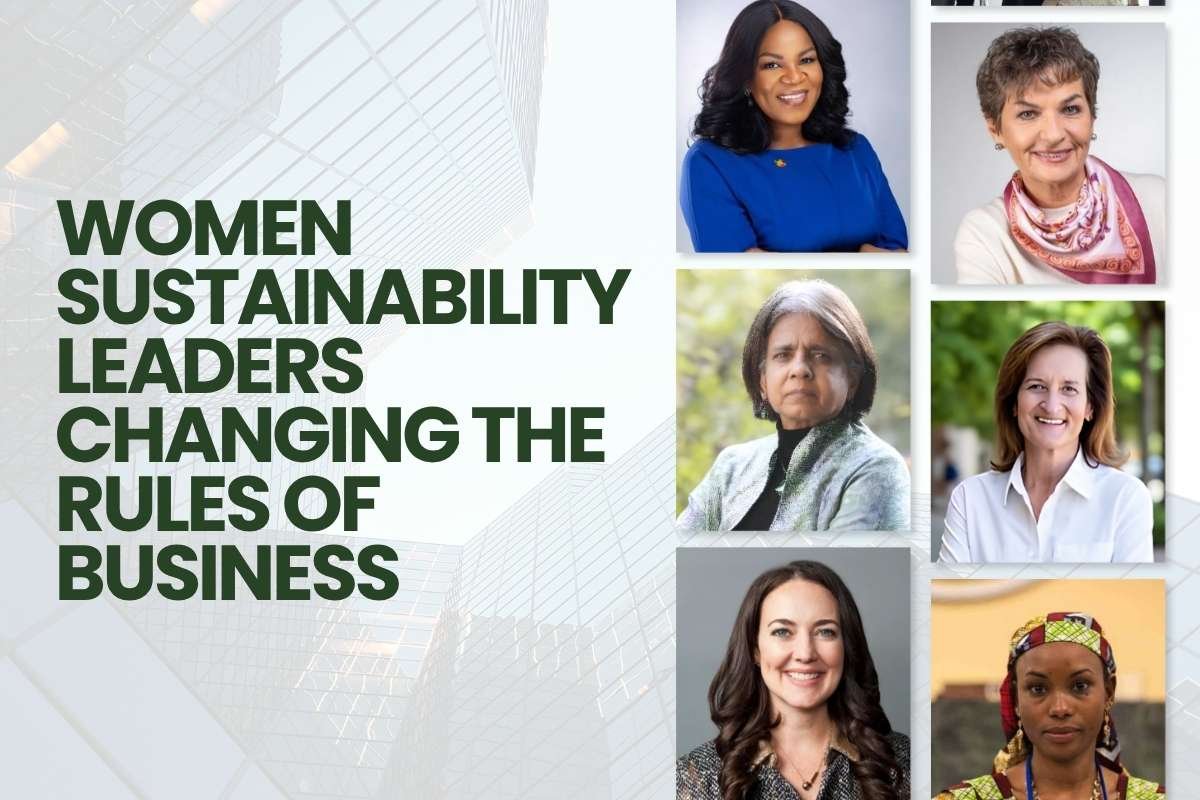
Explore six women sustainability leaders changing the rules of business in 2026, from clean energy and climate diplomacy to environmental policy, sustainable entrepreneurship, Indigenous climate action, ESG strategy, green skills, and the future of women in sustainable business.
What happens when sustainability stops being a side initiative and starts shaping how businesses compete?
The answer is already emerging through women sustainability leaders changing the rules of business who are redefining growth around climate action, clean energy, ESG, circularity, and responsible innovation.
Women held just 30.5% of managerial positions globally in 2025, yet their influence across the sustainability transition is growing. The World Economic Forum reports that 47% of employers expect efforts to reduce carbon emissions to transform their businesses by 2030.
These numbers point to a bigger shift: sustainability is no longer just about reducing impact; it is becoming a business strategy. This shift is also creating new opportunities for women, as more leaders influence decisions around climate, finance, innovation, and long-term growth.
From climate diplomacy and clean energy to sustainable entrepreneurship and environmental policy, these leaders are challenging conventional models and proving that purpose, resilience, and profitability can move together.
Here are six women sustainability leaders changing the rules of business and the decisions that made their impact possible.
Why are women sustainability leaders changing business?
The shift toward sustainable business is changing what leadership looks like. Women sustainability leaders changing the rules of business are helping move sustainability from a reporting function to a strategic priority, connecting climate action with growth, innovation, and long-term resilience.
- Sustainability is becoming a business strategy: Climate change now influences investment, supply chains, operations, talent, and long-term growth, not just environmental targets.
- Businesses are preparing for major change: The World Economic Forum reports that 47% of employers expect carbon-reduction efforts to transform their businesses by 2030, while 41% expect climate adaptation to drive organisational change.
- The green transition is creating jobs: Climate adaptation could generate 5 million net jobs globally by 2030, while climate mitigation could add another 3 million.
- Women remain underrepresented in leadership: Women held just 30.5% of managerial positions globally in 2025, according to the United Nations.
- Sustainability leadership now requires business skills: Today’s leaders need to understand finance, technology, policy, innovation, and strategy alongside environmental issues.
6 women sustainability leaders redefining business
From clean energy and climate diplomacy to environmental advocacy and sustainable entrepreneurship, these six women sustainability leaders changing the rules of business are challenging conventional business models and reshaping how organisations think about growth, resilience, and impact.
1. Damilola Ogunbiyi: making clean energy a business priority
Damilola Ogunbiyi has built a career at the intersection of clean energy, economic development, and policy. Her journey shows how expanding energy access can drive both sustainability and economic opportunity.
- Global energy leader: Ogunbiyi is CEO and Special Representative of the UN Secretary-General for Sustainable Energy for All (SEforALL) and Co-Chair of UN-Energy.
- From Nigeria to global impact: She previously led Nigeria’s Rural Electrification Agency, working to expand electricity access across underserved communities.
- Energy as economic opportunity: Her work connects clean energy with jobs, productivity, investment and development, rather than treating it solely as an environmental issue.
- The decision that shaped her impact: She has championed collaboration between governments, businesses and development organisations to scale clean-energy solutions.
- Key lesson for women: Build expertise across sustainability, policy and business, and focus on solutions that can create measurable impact at scale.
2. Christiana Figueres: turning climate diplomacy into business action
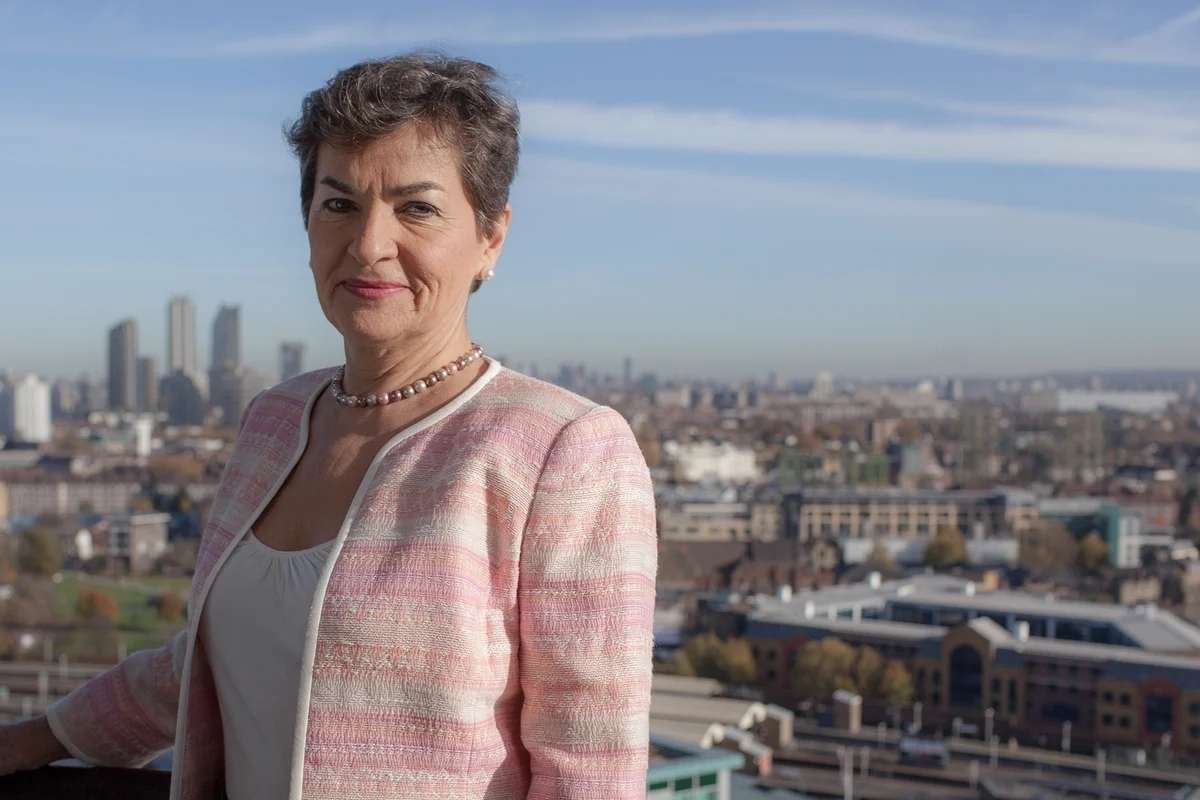
Christiana Figueres shows how women sustainability leaders changing the rules of business can extend their influence beyond environmental policy into global business and economic transformation. Her career demonstrates the power of collaboration in tackling challenges that no single government or company can solve alone.
- Global climate leader: Figueres served as Executive Secretary of the UN Framework Convention on Climate Change (UNFCCC) from 2010 to 2016.
- A key force behind the Paris Agreement: She played a central role in the negotiations that led to the 2015 Paris Agreement, bringing governments and non-state actors together around global climate action.
- Building business partnerships: Her approach helped strengthen collaboration between governments, businesses, investors, and civil society, making climate action a shared responsibility.
- The decision that shaped her impact: She focused on building consensus rather than treating climate policy as a government-only issue.
- Key lesson for women: Effective sustainability leadership requires persistence, negotiation, and coalition-building skills that can turn ambitious climate goals into collective action.
3. Sunita Narain: putting equity at the centre of environmental policy
Sunita Narain has spent decades showing that environmental sustainability cannot be separated from development, equity, and public policy. Her work has influenced how India debates climate change, pollution, water, and sustainable development, highlighting the role of women in climate policy and environmental advocacy in shaping environmental decision-making.
- Leading environmental voice: Narain is Director General of the Centre for Science and Environment (CSE) and has worked with the organisation since 1982.
- Putting equity first: Her work connects environmental protection with poverty, resource access, consumption and development, particularly in emerging economies.
- Influencing policy: She has been a prominent voice on issues including air pollution, climate change, water management and sustainable development in India and internationally.
- The decision that shaped her impact: Narain has consistently challenged one-size-fits-all approaches to sustainability, arguing that environmental policies must reflect different countries’ development realities.
- Key lesson for women: Build deep expertise, use evidence to challenge conventional thinking, and connect sustainability with the social and economic realities of the communities affected by it.
4. Rose Marcario: Proving purpose and profit can coexist
Rose Marcario’s career demonstrates how women sustainability leaders changing the rules of business can move sustainability from a corporate value to a core business strategy. As former CEO of Patagonia, she helped show that environmental responsibility and commercial performance can reinforce each other.
- Purpose-driven leadership: Marcario served as President and CEO of Patagonia, strengthening the company’s focus on environmental responsibility and responsible business.
- Embedding sustainability into business: Under her leadership, environmental values were closely connected to products, operations, supply chains, and corporate activism.
- Challenging traditional thinking: Her approach showed that sustainability does not have to be treated simply as a cost or compliance requirement—it can strengthen brand identity, customer loyalty, and long-term resilience.
- The decision that shaped her impact: Marcario consistently treated environmental responsibility as part of how the company competed, rather than as a separate CSR initiative.
- Key lesson for women: Sustainability leadership becomes more powerful when it reaches beyond ESG teams and influences strategy, operations, investment, and corporate decision-making.
5. Sarah Kauss: Making sustainability desirable through entrepreneurship
Sarah Kauss took a different route into sustainable business, using entrepreneurship, design and consumer behaviour to make sustainability part of everyday life. Her journey shows that sustainable products can succeed when environmental purpose is combined with strong commercial thinking.
- From professional services to entrepreneurship: Kauss founded S’well in 2010 after working in accounting and real estate, starting the company with $30,000 of her own savings.
- Turning reuse into a lifestyle: S’well made reusable water bottles more attractive and desirable, helping position sustainability as a consumer experience rather than a sacrifice.
- Building commercial success: The company surpassed $100 million in revenue, demonstrating that sustainability-focused products can develop significant market demand.
- The decision that shaped her impact: Kauss focused on combining design, convenience, and environmental purpose, rather than relying on sustainability messaging alone.
- Key lesson for women: Sustainable entrepreneurship needs more than a strong mission; it requires customer insight, financial discipline, product-market fit, and the confidence to build something new.
6. Hindou Oumarou Ibrahim: Bringing Indigenous knowledge into climate leadership
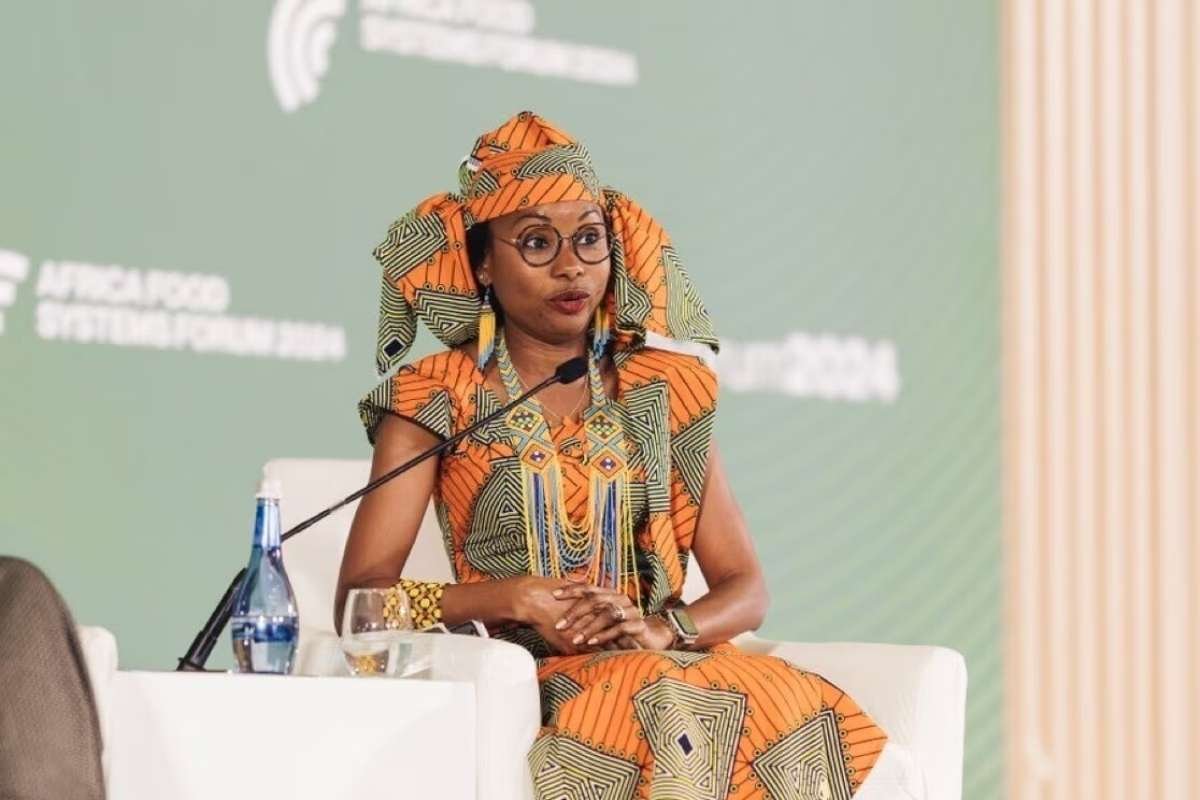
Hindou Oumarou Ibrahim is bringing a vital perspective to climate leadership: Indigenous knowledge belongs at the centre of sustainability solutions. Her work connects climate action with women’s rights, community resilience and traditional knowledge.
- Indigenous climate leader: Ibrahim is a Chadian environmental and Indigenous rights advocate and coordinator of the Association for Peul Women and Autochthonous Peoples of Chad (AFPAT).
- Putting communities at the centre: Her work highlights how Indigenous communities can contribute local knowledge, climate solutions and ecosystem expertise, rather than being viewed only as vulnerable populations.
- Connecting traditional and scientific knowledge: She has advocated combining Indigenous knowledge with modern climate science to improve adaptation and resource management.
- The decision that shaped her impact: Ibrahim chose to bring the voices of Indigenous communities, particularly women, into international climate discussions and decision-making.
- Key lesson for women: Effective sustainability leadership means claiming a seat at the decision-making table, valuing lived experience and ensuring local communities are part of the solutions they are affected by.
What are these women changing about business?
These six leaders work across different sectors, but their approaches point to the same shift: sustainability is moving from a corporate responsibility to a business imperative. Their examples also show how women-led businesses approach sustainability differently, connecting environmental goals with innovation, resilience, customer expectations, and long-term value.
- From CSR to strategy: Sustainability is increasingly being integrated into core business decisions rather than treated as a separate CSR activity. The women sustainability leaders changing the rules of business show how environmental priorities can influence products, operations, investment, and corporate strategy.
- From risk to opportunity: Climate challenges are creating new markets, technologies, and jobs. The World Economic Forum estimates climate adaptation could generate 5 million net jobs globally by 2030, while climate mitigation could add another 3 million.
- From compliance to competitive advantage: Businesses are increasingly connecting ESG with innovation, operational efficiency, resilience, and customer expectations.
- From traditional expertise to green skills: Green skills are becoming more valuable. The share of workers reporting green skills rose from 9% in 2015 to 13% in 2024, according to the World Economic Forum. For women sustainability leaders changing the rules of business, this growing demand creates opportunities to combine environmental knowledge with technology, finance, data, and strategic decision-making.
- From representation to decision-making: Women held 30.5% of managerial positions globally in 2025, highlighting the need to move beyond representation and give more women influence over capital, strategy, policy, and investment decisions.
The real opportunity is to ensure women sustainability leaders changing the rules of business are not limited to sustainability departments but have a voice in the decisions that determine how organisations grow.
The bigger lesson is clear: the future of sustainable business will be shaped not only by what companies do differently, but by who gets to decide what comes next.
The three pillars of sustainability behind their leadership
The six leaders show that sustainability cannot be reduced to environmental action alone. Their approaches demonstrate how women sustainability leaders are changing the rules of business, connecting environmental responsibility with social outcomes and commercial value.
| Pillar | What It Covers | Business Focus | Leadership Example |
| Environmental | Climate action, renewable energy, biodiversity, waste and resource efficiency | Reduce environmental impact and build climate resilience | Damilola Ogunbiyi: clean energy and energy access |
| Social | Workers, communities, equity, inclusion and human rights | Create fairer and more inclusive business systems | Sunita Narain: environmental equity and development |
| Economic | Financial viability, innovation, investment and long-term value | Make sustainability commercially sustainable | Sarah Kauss: Sustainable products and entrepreneurship |
Environmental sustainability
Environmental sustainability focuses on climate action, renewable energy, biodiversity, resource efficiency, pollution reduction, and circularity. These priorities are increasingly influencing circular economy business models, which focus on keeping products and resources in use for longer while reducing waste.
For women sustainability leaders changing the rules of business, environmental priorities are increasingly connected to decisions about energy, operations, supply chains, and resource management.
Social sustainability
Social sustainability covers workers’ rights, communities, equity, inclusion, health, and access to opportunity.
Leaders such as Sunita Narain demonstrate why environmental decisions must also consider the communities affected by climate change, pollution, resource use, and development.
Economic sustainability
Economic sustainability ensures businesses remain financially viable while creating long-term value without undermining environmental or social systems.
Sarah Kauss’s entrepreneurial approach demonstrates how sustainability can become part of a commercially viable product strategy rather than remaining only a purpose statement.
Why the three pillars must work together?
Clean energy can drive economic development, sustainable products can create new markets, and climate policies can affect both businesses and communities.
The leadership lesson is clear: the strongest sustainability strategies connect environmental impact with social outcomes and commercial performance.
Together, these three pillars provide the foundation for businesses that are not only more responsible, but also more resilient, competitive, and future-ready.
From ESG reporting to sustainability strategy
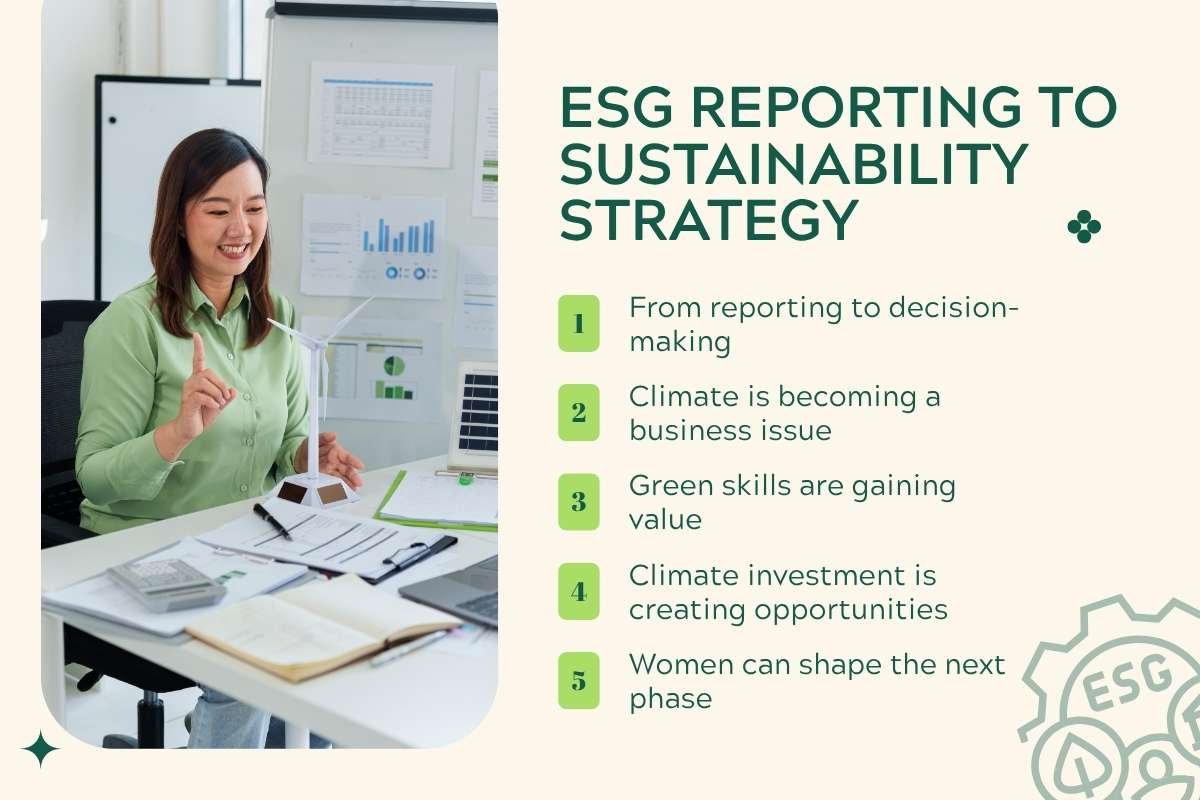
The biggest shift in corporate sustainability is happening when companies move beyond corporate sustainability reporting and into action. ESG data becomes more valuable when it informs investment, operations, risk management, and long-term business strategy.
For women sustainability leaders changing the rules of business, this shift creates an opportunity to move sustainability from a reporting function into the decisions that determine how companies allocate resources, manage risk, and pursue growth. Turning these priorities into action requires a clear sustainability strategy for your company, with measurable goals linked to business outcomes.
- From reporting to decision-making: ESG should inform capital allocation, procurement, product development, risk management, and corporate strategy rather than remain a disclosure exercise.
- Climate is becoming a business issue: The World Economic Forum reports that 47% of employers expect efforts to reduce carbon emissions to transform their businesses by 2030, while 41% expect climate adaptation to drive organisational change.
- Green skills are gaining value: Green skills increased from 9% of the workforce in 2015 to 13% in 2024, while job postings requiring at least one green skill grew by nearly 22% between 2022 and 2023.
- Climate investment is creating opportunities: The International Finance Corporation estimates climate investments could generate 213 million cumulative jobs globally by 2030. As investment grows, women sustainability leaders changing the rules of business can help shape capital, scale clean technologies, and drive new opportunities.
- Women can shape the next phase: As sustainability becomes embedded across finance, operations, technology, policy and strategy, women need opportunities to move beyond ESG-specific roles and into positions where they influence budgets, investments and growth.
The future sustainability leader will therefore need more than environmental expertise. Business fluency, data skills, financial understanding and strategic thinking will increasingly determine who can turn sustainability goals into measurable business outcomes. Sustainability KPIs can help track whether those goals are translating into meaningful environmental and business results.
What makes a great woman sustainability leader?
The six leaders profiled above show that sustainability leadership is about more than environmental expertise. The strongest leaders combine business understanding, systems thinking, and the ability to turn complex challenges into practical action.
- Systems thinking: Understand how climate, people, markets, and policy interact. Damilola Ogunbiyi, for example, has linked clean-energy access with economic development, showing that energy policy can also influence jobs, productivity, and opportunity.
- Commercial awareness: Connect sustainability with growth, innovation, and long-term value. Sarah Kauss demonstrated this through S’well, turning reusable bottles into a desirable consumer product rather than positioning sustainability as a sacrifice. This commercial mindset also helps leaders pitch sustainability initiatives (supporting) in terms of business value and measurable outcomes.
- Evidence-based decision-making: Use credible data to move sustainability from ambition to action. Sunita Narain’s environmental advocacy has consistently relied on research and evidence to challenge policies around pollution, water, climate, and resource use.
- Coalition-building: Work across governments, businesses, investors,s and communities. Christiana Figueres’ role in the diplomacy behind the Paris Agreement demonstrates how bringing different stakeholders together can turn ambitious climate goals into collective action.
- Courage to challenge the status quo: Question established business models and push for meaningful change. Rose Marcario’s leadership at Patagonia showed how environmental responsibility could be integrated into products, business practices, and corporate activism.
For women sustainability leaders changing the rules of business, these qualities demonstrate that effective sustainability leadership is ultimately about turning purpose into measurable business and social impact.
The real-world examples are clear: great sustainability leaders do not simply ask, “How can we make this business more sustainable?” They ask, “How can sustainability change the way this business creates value?”
How can women build careers in sustainability?
As sustainability becomes embedded across business functions, career opportunities are expanding beyond traditional environmental roles. The growing demand for green jobs and sustainability roles is creating opportunities across climate, finance, technology, operations, and strategy.
- Build green and business skills: The World Economic Forum reports that green skills grew from 9% of the workforce in 2015 to 13% in 2024, while green job postings rose nearly 22% from 2022 to 2023. For women, sustainability leaders changing the rules of business by combining sustainability expertise with commercial skills can strengthen pathways to leadership.
- Explore diverse career paths: The growing demand for ESG careers for women is opening opportunities across climate policy, green finance, sustainability strategy, renewable energy, circular economy, climate technology, and impact investing.
- Develop financial expertise: Sustainability increasingly influences investment and capital allocation, creating opportunities in green finance careers for women. Understanding finance, risk, and business performance can help women move from advisory roles into decision-making positions.
- Build cross-functional experience: Experience in operations, procurement, supply chains, data, or strategy can make sustainability professionals more effective at turning climate goals into business action.
- Seek leadership and mentorship opportunities: Representation remains a challenge, with women holding only 30.5% of managerial positions globally in 2025. Building networks, developing relevant sustainability certifications (supporting), finding mentors, and seeking roles with genuine decision-making authority can help strengthen career progression.
The opportunity is not simply to enter the sustainability sector. It is to develop the expertise and influence needed to shape how businesses respond to the green transition.
The future of women in sustainable business

The next phase of sustainability leadership will be defined not just by how many women enter the field, but by how much decision-making power they hold. As climate, finance, and business strategy become increasingly connected, women sustainability leaders changing the rules of business have an opportunity to shape the direction of the green economy.
- Sustainability will move deeper into business: Climate considerations are increasingly influencing finance, operations, procurement, risk, and corporate strategy, making sustainability a company-wide responsibility.
- Green skills will become more valuable: As businesses adapt to climate change, demand will grow for professionals who understand climate data, sustainable finance, renewable energy, ESG, and resource efficiency.
- Women entrepreneurs represent untapped potential: The World Bank estimates that women entrepreneurs face a $1.7 trillion financing gap globally. Closing this gap could unlock significant economic and innovation potential.
- Leadership needs to go beyond ESG roles: Women need opportunities to move into C-suite, board, investment, operations,s and strategy positions, where they can influence budgets, products, and long-term growth.
- The goal is influence, not just representation: The future of sustainable business depends on giving women a meaningful voice in decisions about capital, innovation, policy,y and growth.
The opportunity is clear: women should not just participate in the green economy; they should help define what the green economy becomes.
Conclusion:
The future of sustainable business will not be shaped only by those who respond to change. It will be shaped by women sustainability leaders changing the rules of business, using their influence to drive innovation, resilience, and long-term growth.
From clean energy and climate diplomacy to sustainable entrepreneurship and Indigenous climate action, their work shows that sustainability is becoming a core part of how businesses create value and prepare for the future.
As green jobs, climate investment, and sustainability skills continue to grow, women have an opportunity to take on greater influence across capital, innovation, policy, and business strategy.
Frequently asked questions
1. Who are some leading women in sustainability?
Notable women in sustainability include Damilola Ogunbiyi, Christiana Figueres, Sunita Narain, Rose Marcario, Sarah Kau, and Hindou Oumarou Ibrahim, who have contributed to clean energy, climate policy, environmental advocacy, sustainable business, and climate action.
2. What makes a strong sustainability leader?
A strong sustainability leader combines systems thinking, evidence-based decision-making, collaboration, and long-term vision with the ability to turn sustainability goals into measurable environmental, social, and business outcomes.
3. What careers can women pursue in sustainability?
Women can pursue careers across ESG, climate policy, green finance, sustainability strategy, renewable energy, circular economy, climate technology, environmental consulting, and sustainable entrepreneurship.
4. How can women contribute to climate action and sustainability?
Women can contribute through leadership, research, policymaking, entrepreneurship, community initiatives, renewable energy, sustainable finance,e and corporate sustainability. Their participation can help bring diverse perspectives to climate and environmental decision-making.
5. Why are women important to sustainable business?
Women can bring diverse perspectives to decisions involving climate action, investment, innovation, and business strategy. Greater representation in sustainability leadership can support more inclusive and effective approaches to the green transition.