

The demand for green jobs and sustainability roles is growing faster than many people realize. According to the International Labour Organization (ILO), the transition to a greener economy could create 24 million new jobs globally by 2030. At the same time, the World Economic Forum’s Future of Jobs Report 2025 identifies environmental stewardship as one of the fastest-growing areas of employment, with demand for sustainability specialists, renewable energy engineers, and environmental professionals expected to increase significantly over the next five years.
This shift is transforming the way businesses hire. Sustainability is no longer limited to environmental organizations or government agencies. Companies across finance, manufacturing, technology, healthcare, construction, retail, and consulting are investing in professionals who can help reduce emissions, improve resource efficiency, meet ESG requirements, and build more resilient business operations. As climate regulations become stricter and businesses place greater emphasis on sustainable growth, the need for skilled sustainability professionals continues to rise.
Whether you’re a recent graduate, planning a career change, or looking to future-proof your skills, green jobs offer an opportunity to work in a field with strong long-term demand and meaningful impact. This guide explains what green jobs and sustainability roles entail, which industries are hiring the fastest, the highest-paying career paths, the skills and certifications employers value, salary expectations, and practical steps to start a successful career in the green economy.
What Are Green Jobs and Sustainability Roles?
Green jobs and sustainability roles help organizations reduce their environmental impact while driving responsible business growth. Professionals in these roles improve energy efficiency, manage carbon emissions, support ESG initiatives, ensure environmental compliance, and promote sustainable business practices.
These careers now span industries such as renewable energy, finance, technology, manufacturing, construction, healthcare, retail, and consulting.
Common Sustainability Roles
| Renewable Energy Engineer | Develops clean energy solutions. |
| ESG Analyst | Evaluates ESG performance and reporting. |
| Sustainability Manager | Leads sustainability and climate initiatives. |
| Carbon Accounting Specialist | Measures and reduces greenhouse gas emissions. |
| Green Finance Analyst | Assesses sustainable investments and ESG risks. |
Highest-Demand Green Jobs and Sustainability Roles
1. Sustainability Manager
Sustainability Managers help organizations develop and implement strategies that reduce environmental impact while supporting long-term business growth.
| What They Do | Develop sustainability strategies, set ESG goals, monitor environmental performance, coordinate cross-functional sustainability initiatives, and ensure compliance with sustainability regulations and reporting standards. |
| Average Salary (US) | $95,000–$140,000 |
| Key Skills | ESG strategy, stakeholder management, sustainability reporting, project management |
| Industries Hiring | Manufacturing, Retail, Technology, Healthcare, Consumer Goods |
2. ESG Analyst
ESG Analysts assess a company’s environmental, social, and governance performance to help businesses and investors make informed decisions.
| What They Do | Analyze ESG data, evaluate sustainability risks, prepare ESG reports, benchmark company performance, and support investment and corporate sustainability decisions. |
| Average Salary (US) | $80,000–$120,000 |
| Key Skills | ESG reporting, financial analysis, data analytics, risk assessment |
| Industries Hiring | Banking, Investment Firms, Consulting, Asset Management |
3. Renewable Energy Engineer
Renewable Energy Engineers design and oversee projects that generate clean energy from renewable sources.
| What They Do | Design, develop, test, and manage renewable energy systems such as solar, wind, hydroelectric, and battery storage projects while improving energy efficiency. |
| Average Salary (US) | $90,000–$140,000 |
| Key Skills | Engineering, renewable energy systems, project management |
| Industries Hiring | Energy, Utilities, Infrastructure, Construction |
4. Carbon Accounting Specialist
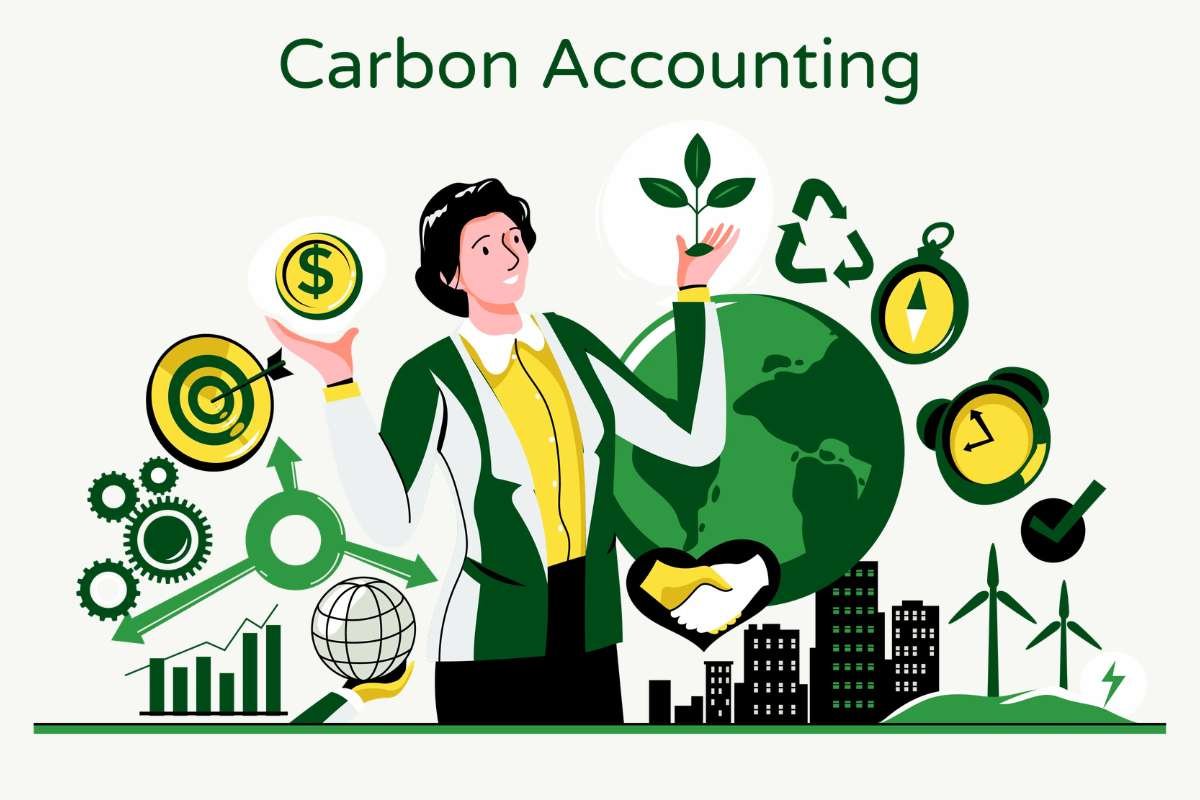
Carbon Accounting Specialists help organizations measure and reduce greenhouse gas emissions.
| What They Do | Calculate carbon emissions, prepare greenhouse gas inventories, monitor emissions data, and recommend strategies to reduce an organization’s carbon footprint. |
| Average Salary (US) | $75,000–$120,000 |
| Key Skills | Carbon accounting, GHG Protocol, emissions reporting, data analysis |
| Industries Hiring | Manufacturing, Consulting, Corporate Sustainability |
5. Climate Risk Consultant
Climate Risk Consultants help organizations understand and manage risks associated with climate change.
| What They Do | Assess climate-related financial and operational risks, conduct scenario analysis, develop adaptation strategies, and advise organizations on regulatory compliance. |
| Average Salary (US) | $95,000–$150,000 |
| Key Skills | Climate risk assessment, ESG, financial modeling, regulatory compliance |
| Industries Hiring | Financial Services, Insurance, Consulting |
6. Circular Economy Consultant
Circular Economy Consultants help businesses reduce waste and maximize resource efficiency.
| What They Do | Develop circular business models, improve product life cycles, reduce waste, optimize resource use, and advise on sustainable production practices. |
| Average Salary (US) | $85,000–$130,000 |
| Key Skills | Circular economy, operations, sustainable supply chains |
| Industries Hiring | Manufacturing, Retail, Consulting |
7. Sustainability Data Analyst
Sustainability Data Analysts transform sustainability KPIs and ESG metrics into actionable business insights that support better decision-making.
| What They Do | Collect, analyze, and visualize ESG and sustainability data, monitor KPIs, prepare dashboards, and support sustainability reporting and decision-making. |
| Average Salary (US) | $75,000–$115,000 |
| Key Skills | Data analytics, Power BI, Excel, sustainability reporting |
| Industries Hiring | Technology, Consulting, Corporate Organizations |
8. Environmental Scientist
Environmental Scientists study environmental issues and develop practical solutions to protect natural resources.
| What They Do | Conduct environmental assessments, monitor pollution, perform field research, ensure regulatory compliance, and recommend conservation and remediation strategies. |
| Average Salary (US) | $70,000–$110,000 |
| Key Skills | Environmental assessment, GIS, research, compliance |
| Industries Hiring | Government, NGOs, Energy, Environmental Consulting |
9. Green Finance Analyst
Green Finance Analysts evaluate investments that support sustainable development and climate goals.
| What They Do | Analyze sustainable investment opportunities, assess ESG risks, evaluate green projects, and support climate-focused investment decisions. |
| Average Salary (US) | $90,000–$135,000 |
| Key Skills | Sustainable finance, ESG investing, financial modeling |
| Industries Hiring | Banking, Investment Firms, Private Equity |
10. Supply Chain Sustainability Manager
These professionals ensure supply chains are environmentally responsible and ethically managed.
| What They Do | Develop sustainable sourcing strategies, evaluate suppliers, reduce supply chain emissions, improve resource efficiency, and ensure compliance with ESG standards. |
| Average Salary (US) | $95,000–$145,000 |
| Key Skills | Supply chain management, procurement, ESG compliance |
| Industries Hiring | Manufacturing, Retail, Logistics, Consumer Goods |
11. Sustainability Reporting Specialist
Sustainability Reporting Specialists communicate an organization’s ESG performance to stakeholders.
| What They Do | Collect sustainability data, prepare ESG reports, ensure compliance with reporting frameworks such as GRI and ISSB, and communicate sustainability performance to investors and regulators. |
| Average Salary (US) | $80,000–$120,000 |
| Key Skills | GRI, ISSB, CSRD, report writing, data analysis |
| Industries Hiring | Consulting, Corporate Organizations, Financial Services |
Which Role Is Right for You?
The right career depends on your interests and existing skills.
- Business graduates may thrive as Sustainability Managers or ESG Consultants.
- Finance professionals can pursue Green Finance or Climate Risk roles.
- Engineers are well suited to renewable energy and sustainable infrastructure.
- Data professionals can specialize in ESG analytics and carbon accounting.
- Supply chain specialists can focus on responsible sourcing and circular economy initiatives.
The diversity of these roles means sustainability is no longer limited to environmental specialists; professionals from almost every discipline can contribute to the green economy.
Why Are Green Jobs Growing So Fast?
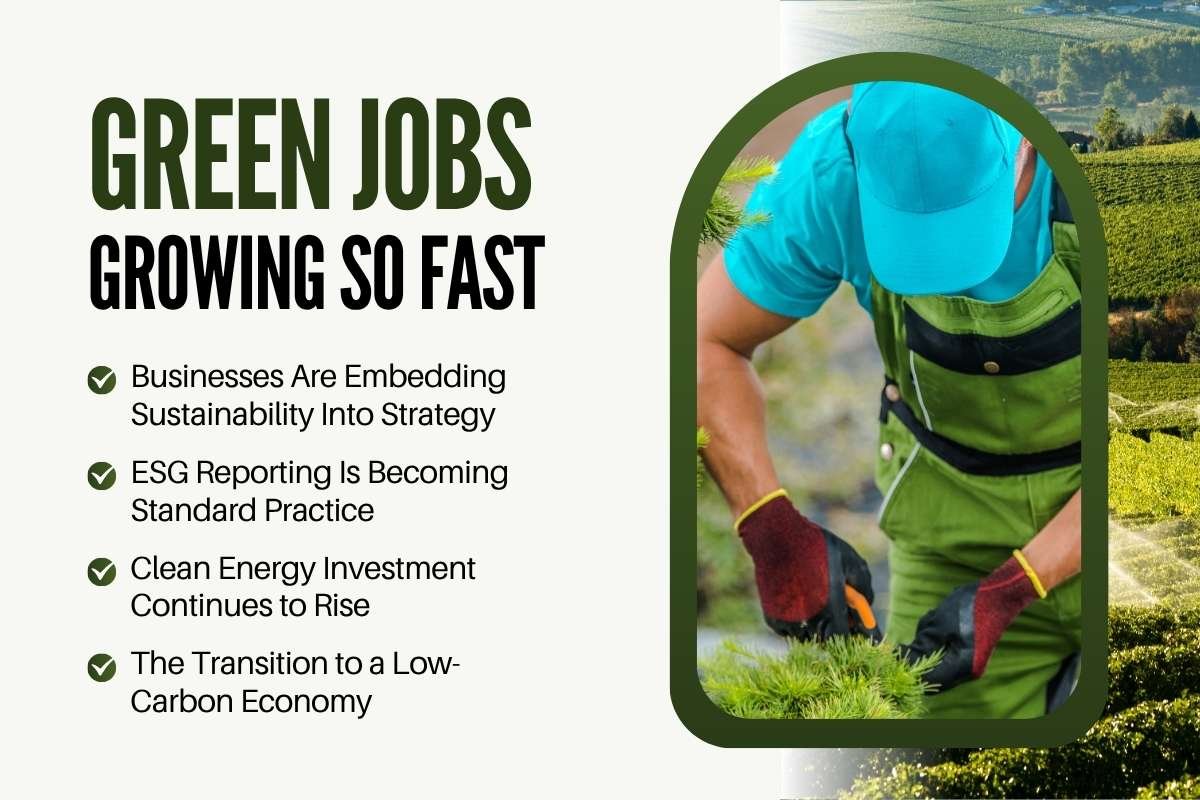
A single industry doesn’t drive the rapid growth of green jobs and sustainability roles; it’s the result of major economic, environmental, and regulatory shifts that are transforming how businesses operate. Sustainability is no longer viewed as a corporate responsibility initiative; it has become a strategic priority that influences investment decisions, risk management, product development, and long-term business growth.
Several key factors are accelerating this demand.
1. Businesses Are Embedding Sustainability Into Strategy
Companies across sectors are integrating sustainability into their operations to improve efficiency, strengthen supply chains, reduce costs, and meet stakeholder expectations by developing a long-term sustainability strategy for your company that aligns environmental goals with business growth. As a result, sustainability expertise is now required in departments ranging from finance and operations to procurement and product development.
2. ESG Reporting Is Becoming Standard Practice
Governments and regulators are introducing stricter sustainability disclosure requirements, while investors are demanding greater transparency. As a result, organizations are investing more in corporate sustainability reporting to improve ESG disclosures and regulatory compliance. This has increased the need for professionals who understand ESG reporting, climate risk, and global reporting frameworks such as GRI and ISSB.
3. Clean Energy Investment Continues to Rise
According to the International Energy Agency (IEA), investment in clean energy technologies is expected to exceed US$2.2 trillion in 2025, creating new opportunities in renewable energy, energy storage, electric mobility, and sustainable infrastructure.
4. The Transition to a Low-Carbon Economy
Organizations worldwide are working toward net-zero emissions by improving energy efficiency, reducing waste, adopting circular economy business models, and investing in low-carbon technologies. This transformation is creating demand for professionals who can guide businesses through the transition.
Why Sustainability Careers Are Future-Ready?
Unlike many emerging career trends, sustainability is supported by long-term global priorities, including climate action, responsible investing, and evolving environmental regulations. This means demand for skilled professionals is expected to remain strong across industries for years to come.
Whether your background is in business, engineering, finance, technology, or environmental science, there has never been a better time to explore green jobs and sustainability roles.
Top Green Jobs and Sustainability Roles in 2026
The green economy is creating opportunities across industries, from renewable energy and manufacturing to finance, technology, and consulting. As sustainability becomes a core business priority, organizations are looking for professionals who can help them reduce environmental impact, comply with evolving regulations, and drive long-term growth.
According to the World Economic Forum’s Future of Jobs Report 2025, roles such as environmental engineers, renewable energy engineers, environmental specialists, and sustainability specialists are among the fastest-growing occupations globally. Meanwhile, the International Energy Agency (IEA) estimates that clean energy investments are expected to exceed US$2 trillion in 2025, further increasing demand for skilled professionals across the sector.
Whether you’re interested in data, engineering, finance, policy, or business strategy, there are now green jobs and sustainability roles to match a wide range of skills and career goals.
Which Industries Are Hiring the Most Sustainability Professionals?
The demand for green jobs and sustainability roles is no longer limited to renewable energy companies. Today, organizations across finance, technology, healthcare, manufacturing, retail, consulting, and the public sector are integrating sustainability into their business strategies.
According to the World Economic Forum’s Future of Jobs Report 2025, environmental stewardship is among the fastest-growing employment sectors globally, creating opportunities across nearly every major industry.
Industries Driving Green Employment
1. Renewable Energy
Investment in solar, wind, hydrogen, and battery storage continues to create thousands of new jobs worldwide.
| Common Roles | Renewable Energy Engineer, Energy Manager, Solar Project Manager |
| Why It’s Growing | Expansion of clean energy projects and infrastructure |
2. Manufacturing
Manufacturers are improving energy efficiency, reducing emissions, and adopting circular economy practices.
| Common Roles | Sustainability Manager, Environmental Compliance Manager |
| Why It’s Growing | Sustainable production and carbon reduction initiatives |
3. Banking and Sustainable Finance
Financial institutions increasingly evaluate ESG performance when making investment and lending decisions, creating strong demand for professionals pursuing green finance careers for women in banking, asset management, and investment research.
| Common Roles | ESG Analyst, Green Finance Analyst, Climate Risk Consultant |
| Why It’s Growing | Expansion of ESG investing and sustainable finance |
4. Technology
Technology companies are developing solutions for carbon tracking, ESG reporting, and environmental data management.
| Common Roles | Sustainability Data Analyst, ESG Software Specialist |
| Why It’s Growing | Growth of AI, data analytics, and sustainability software |
5. Construction and Infrastructure
Green buildings and sustainable infrastructure projects continue to drive demand for sustainability professionals.
| Common Roles | LEED Specialist, Sustainable Design Engineer |
| Why It’s Growing | Energy-efficient construction and green building standards |
7. Retail and Consumer Goods
Brands are investing in responsible sourcing, sustainable packaging, and lower-carbon supply chains.
| Common Roles | Sustainable Sourcing Manager, ESG Manager |
| Why It’s Growing | Consumer demand for sustainable products |
Beyond the private sector, growing opportunities also exist in women in climate policy and environmental advocacy, where professionals help shape environmental regulations, public policy, and global sustainability initiatives.
Skills Employers Look for in Green Jobs and Sustainability Roles

As sustainability becomes central to business strategy, employers are looking for professionals who combine technical expertise with business and analytical skills. The most successful candidates can interpret data, solve complex problems, communicate effectively, and turn sustainability goals into measurable business outcomes.
According to the World Economic Forum’s Future of Jobs Report 2025, analytical thinking, technological literacy, leadership, and environmental stewardship are among the fastest-growing workplace skills.
Most In-Demand Skills and Why They Matter in 2026
| Skill | Why It Matters | Common Roles |
| ESG Reporting | Supports sustainability disclosures and regulatory compliance. | ESG Analyst |
| Carbon Accounting | Measures emissions and develops reduction strategies. | Carbon Accounting Specialist |
| Data Analytics | Converts sustainability data into business insights. | Sustainability Data Analyst |
| Climate Risk Assessment | Helps businesses prepare for climate-related risks. | Climate Risk Consultant |
| Renewable Energy Knowledge | Supports clean energy projects and decarbonization. | Renewable Energy Engineer |
| Supply Chain Sustainability | Improves responsible sourcing and resource efficiency. | Supply Chain Sustainability Manager |
| Project Management | Delivers sustainability initiatives on time and within budget. | Sustainability Manager |
| Communication & Stakeholder Management | Aligns teams, investors, regulators, and leadership around sustainability goals. | ESG Manager, Sustainability Consultant |
How to Build These Skills?
You don’t need years of experience to develop a strong sustainability profile. Start by:
- Learning ESG reporting frameworks such as GRI and ISSB.
- Building proficiency in Excel, Power BI, or Tableau for sustainability reporting.
- Taking courses in carbon accounting, renewable energy, or sustainable finance.
- Participating in internships, volunteer projects, or ESG case studies.
- Staying updated on evolving sustainability regulations and industry trends.
Employers increasingly value professionals who combine technical knowledge with business understanding and strong communication skills. Developing these competencies will prepare you for a wide range of green jobs and sustainability roles across industries.
Best Sustainability Certifications to Boost Your Career
As competition for green jobs and sustainability roles increases, earning relevant sustainability certifications can help you stand out by validating your expertise in ESG, climate risk, and environmental management. While they don’t replace practical experience, they demonstrate your commitment to the field and can improve your chances of landing interviews.
Choose certifications based on your career goals rather than trying to earn multiple credentials.
Top Sustainability Certifications to Advance Your Career
While choosing credentials, many professionals and businesses also compare B Corp certification vs ESG reporting to understand how third-party certification differs from ESG disclosure and reporting requirements.
| Certification | Best For | Career Opportunities |
| LEED Green Associate | Green buildings and sustainable construction | LEED Specialist, Sustainability Manager |
| GRI Professional Certification | ESG reporting and corporate sustainability | ESG Analyst, Sustainability Reporting Specialist |
| ISSB Sustainability Training | Sustainability disclosures and reporting | ESG Reporting Specialist, Sustainability Manager |
| ISO 14001 Lead Auditor | Environmental management and compliance | Environmental Compliance Manager, Lead Auditor |
| CFA Certificate in ESG Investing | Sustainable finance and investment | Green Finance Analyst, ESG Investment Analyst |
| Carbon Accounting & GHG Certification | Carbon management and climate strategy | Carbon Accounting Specialist, Climate Consultant |
How to Choose the Right Certification?
Your certification should align with your career path:
| ESG Reporting | GRI, ISSB |
| Sustainable Finance | CFA ESG Investing |
| Environmental Compliance: | ISO 14001 |
| Green Buildings | LEED Green Associate |
| Climate & Carbon Management | Carbon Accounting Certification |
A certification paired with practical experience and technical skills can significantly strengthen your profile for green jobs and sustainability roles.
How to Start a Career in Green Jobs and Sustainability Roles?

Breaking into sustainability doesn’t necessarily require an environmental science degree. Many professionals begin by exploring ESG careers for women, where transferable business, finance, and analytical skills are highly valued. Professionals from finance, engineering, business, technology, law, and operations are increasingly transitioning into sustainability careers because organizations need diverse expertise to meet their ESG and climate goals.
Follow this roadmap to get started.
Step 1: Learn the Basics
Build a strong understanding of:
- ESG (Environmental, Social, and Governance)
- Climate change and carbon emissions
- Circular economy
- Renewable energy
- Sustainable finance
- Sustainability reporting
Step 2: Choose a Career Path
Focus on a specialization that matches your existing skills.
| Background | Career Options |
| Business | Sustainability Manager, ESG Consultant |
| Finance | ESG Analyst, Green Finance Analyst |
| Engineering | Renewable Energy Engineer, Energy Manager |
| Technology | Sustainability Data Analyst, Carbon Accounting Specialist |
| Supply Chain | Supply Chain Sustainability Manager |
| Environmental Science | Climate Consultant, Environmental Specialist |
Step 3: Build Practical Skills
Strengthen your profile by learning:
- ESG reporting
- Carbon accounting
- Climate risk assessment
- Data analytics (Excel, Power BI, Tableau)
- Project management
- Stakeholder communication
Step 4: Gain Experience
Employers value practical exposure as much as certifications.
You can gain experience by:
- Completing internships
- Volunteering on sustainability projects
- Participating in ESG case competitions
- Supporting sustainability initiatives at your current workplace
- Building personal sustainability projects or research portfolios
Step 5: Network and Apply Strategically
Connect with professionals through LinkedIn, sustainability associations, webinars, and industry conferences. Tailor your resume to highlight transferable skills, measurable achievements, certifications, and sustainability-related projects.
Career Roadmap:
| Step | Action |
| 1 | Learn sustainability fundamentals |
| 2 | Choose a specialization |
| 3 | Build technical and workplace skills |
| 4 | Earn relevant certifications |
| 5 | Gain practical experience |
| 6 | Build your professional network |
| 7 | Apply strategically |
Starting a career in sustainability is about continuous learning. Combining technical knowledge with practical experience will make you a strong candidate for green jobs and sustainability roles across industries.
Salary and Future Outlook for Green Jobs and Sustainability Roles

One of the biggest advantages of pursuing green jobs and sustainability roles is their long-term growth potential. As businesses invest more in ESG initiatives, renewable energy, and climate resilience, demand for skilled sustainability professionals continues to rise.
According to the World Economic Forum’s Future of Jobs Report 2025, the green transition is expected to create a net gain of 78 million jobs globally by 2030. Meanwhile, the International Energy Agency (IEA) projects that global clean energy investment will exceed US$2.2 trillion in 2025, reinforcing the long-term demand for sustainability talent.
| Career Level | Average Annual Salary (US) |
| Entry-Level | $55,000–$80,000 |
| Mid-Level | $80,000–$120,000 |
| Senior-Level | $120,000–$170,000 |
| Executive Leadership | $170,000–$300,000+ |
Salary estimates are based on data from the U.S. Bureau of Labor Statistics (BLS), Glassdoor, and Indeed. Actual salaries vary by industry, location, and experience.
Why Demand Will Continue to Grow
The future of sustainability careers is being shaped by several long-term trends:
- Increasing net-zero commitments from governments and businesses.
- Growing adoption of ESG reporting standards such as ISSB and CSRD.
- Continued investment in renewable energy and clean technologies.
- Expansion of sustainable finance and climate risk management.
- Greater integration of sustainability into corporate strategy and operations.
Fastest-Growing Green Careers
| Career | Growth Driver |
| Sustainability Manager | Corporate sustainability strategy |
| ESG Analyst | ESG reporting and compliance |
| Renewable Energy Engineer | Clean energy expansion |
| Climate Risk Consultant | Climate risk management |
| Carbon Accounting Specialist | Net-zero commitments |
| Green Finance Analyst | Sustainable investing |
As sustainability shifts from a compliance function to a business imperative, professionals with expertise in ESG, renewable energy, climate strategy, and sustainable finance are expected to remain in high demand well beyond 2030.
Conclusion:
The transition to a greener economy is transforming the global job market, creating opportunities that extend far beyond traditional environmental careers. Today, green jobs and sustainability roles are shaping industries such as renewable energy, finance, manufacturing, technology, healthcare, retail, and consulting. Many of these transformations are being led by women sustainability leaders changing the rules of business, who are driving innovation, influencing ESG strategy, and accelerating the transition to a more sustainable economy. As businesses prioritize ESG performance, climate resilience, and responsible resource management, sustainability professionals are becoming essential to long-term business success.
Whether you’re entering the workforce, planning a career switch, or looking to future-proof your skills, sustainability offers a unique combination of purpose, stability, and career growth. The key to success is developing in-demand skills, gaining practical experience, and staying updated on evolving sustainability trends and regulations.
The green transition is no longer a future possibility; it’s already underway. As sustainable business in 2026 continues to evolve, professionals with sustainability expertise will remain essential to long-term business success. It’s already underway. Professionals who invest in sustainability knowledge today will be well-positioned to thrive in one of the world’s fastest-growing career fields.
Frequently Asked Questions (FAQs)
1. What are green jobs and sustainability roles?
Green jobs and sustainability roles are careers that help organizations reduce environmental impact while supporting responsible economic and social development. These roles include positions in renewable energy, ESG reporting, sustainable finance, environmental compliance, climate risk, and corporate sustainability.
2. Which industries hire the most sustainability professionals?
Some of the fastest-growing industries include:
Renewable Energy
Banking and Sustainable Finance
Technology
Manufacturing
Construction and Infrastructure
These sectors are investing heavily in sustainability to meet regulatory requirements, improve operational efficiency, and achieve long-term climate goals.
3. What skills are most important for green jobs?
The most sought-after skills include:
ESG reporting
Carbon accounting
Climate risk assessment
Sustainability data analysis
Communication and stakeholder management
Employers also value analytical thinking, problem-solving, and adaptability.
4. Do I need an environmental science degree to work in sustainability?
No. Many sustainability professionals come from backgrounds in business, finance, engineering, technology, operations, law, and supply chain management. Transferable skills, certifications, and practical experience often matter as much as your academic background.
5. Which sustainability certifications are most valuable?
Some of the most recognized certifications include:
LEED Green Associate
GRI Professional Certification
ISSB Sustainability Training
ISO 14001 Lead Auditor
CFA Institute Certificate in ESG Investing
Carbon Accounting and GHG Management Certifications
The best certification depends on your career goals and area of specialization.