

A board invitation can be a major career milestone, but accepting a seat requires more than considering the title, reputation, or networking opportunities.
The right questions to ask before accepting a board seat help you assess the organisation, board expectations, culture, and potential risks.
Women held 28.3% of global board seats in 2025, according to MSCI. As representation grows, evaluating each opportunity carefully matters.
Think of it as reverse due diligence: the company evaluates you, and you evaluate the company and board before saying yes.
Why should women ask questions before accepting a board seat?
A board position brings influence, but it also brings accountability.
Before accepting, you should understand:
- What the board expects from you
- Why you were selected
- What risks the organisation faces
- How much time the role requires
- Whether directors can exercise independent judgment
This is particularly important for women entering their first boardroom. A prestigious title should not replace a clear understanding of the actual role.
Questions to ask about the company
The first group of questions to ask before accepting a board seat should focus on the organisation itself.
What is the company’s financial position?
Ask to review recent financial statements and understand its revenue, profitability, cash flow, debt, and major liabilities.
What are the company’s biggest strategic priorities?
Understand where the organisation plans to go over the next three to five years and what its key strategic priorities are.
What are its biggest risks?
Ask about the company’s most significant financial, regulatory, operational, and reputational risks.
Why is the board seat open?
This can reveal important context. The vacancy may be part of normal board refreshment, or it may follow a resignation, disagreement, or governance issue.
Ask directly:
“Why is the organisation looking for a new director at this point?”
Questions to ask about the board
The company is only one part of the equation. You also need to understand how the board itself works.
Why was I selected?
Ask:

‘What specific experience or expertise do you believe I will bring to the board?’
A clear answer should help you understand the purpose behind your appointment. It can also show whether your experience aligns with the kind of board profile that gets you noticed by organisations looking for specific expertise.
What skills does the board need?
Find out which capabilities the board is trying to strengthen. These may include finance, technology, risk, sustainability, or industry expertise. It is also worth understanding whether the company is subject to board composition or diversity requirements, particularly if it operates across multiple markets.
The OECD reported that women held 29% of board positions across 52 jurisdictions in 2024, while women held 10% of board chair positions at large listed companies. OECD Corporate Governance Factbook 2025 shows why board composition can vary significantly by market. Board diversity mandates around the world in 2026 can provide further context when assessing how your experience fits the board’s needs.
Who are the other directors?
Review their backgrounds, experience, and tenure. Understanding the board’s collective expertise can reveal where your contribution fits.
How does the board handle disagreement?
Ask whether directors can challenge management and express different views openly.
A board does not need to agree on everything. What matters is whether directors can debate important issues constructively.
How does the chair run meetings?
Ask how agendas are created, how much time is devoted to strategy, and whether every director has an opportunity to contribute.
Questions about your role and responsibilities
One of the most important questions to ask before accepting a board seat is: “What exactly will be expected of me?” Directors need to understand their oversight responsibilities, committee assignments, information rights, and expected contribution before accepting the role.
Understanding the roles and responsibilities as women on corporate boards can help you assess whether the position matches your experience.
Clarify:
- Which committees you will join
- How often you must attend meetings
- What preparation is expected
- What information directors receive
- How directors are evaluated
Directors oversee and challenge management. They should not automatically take on the CEO’s operational responsibilities. Understanding what board directors actually do can help prospective directors distinguish governance responsibilities from day-to-day management.
For women who have developed governance experience through other organisations, non-profit board experience can also offer useful exposure to board responsibilities, oversight, and decision-making. However, the responsibilities and risks of each board role should still be assessed on their own terms.
Questions to ask about time commitment
The advertised number of board meetings rarely tells the full story. NACD research indicates that independent directors can spend nearly 300 hours a year on board responsibilities, making it important to clarify preparation, committee work, travel, and crisis-related demands before accepting a seat.
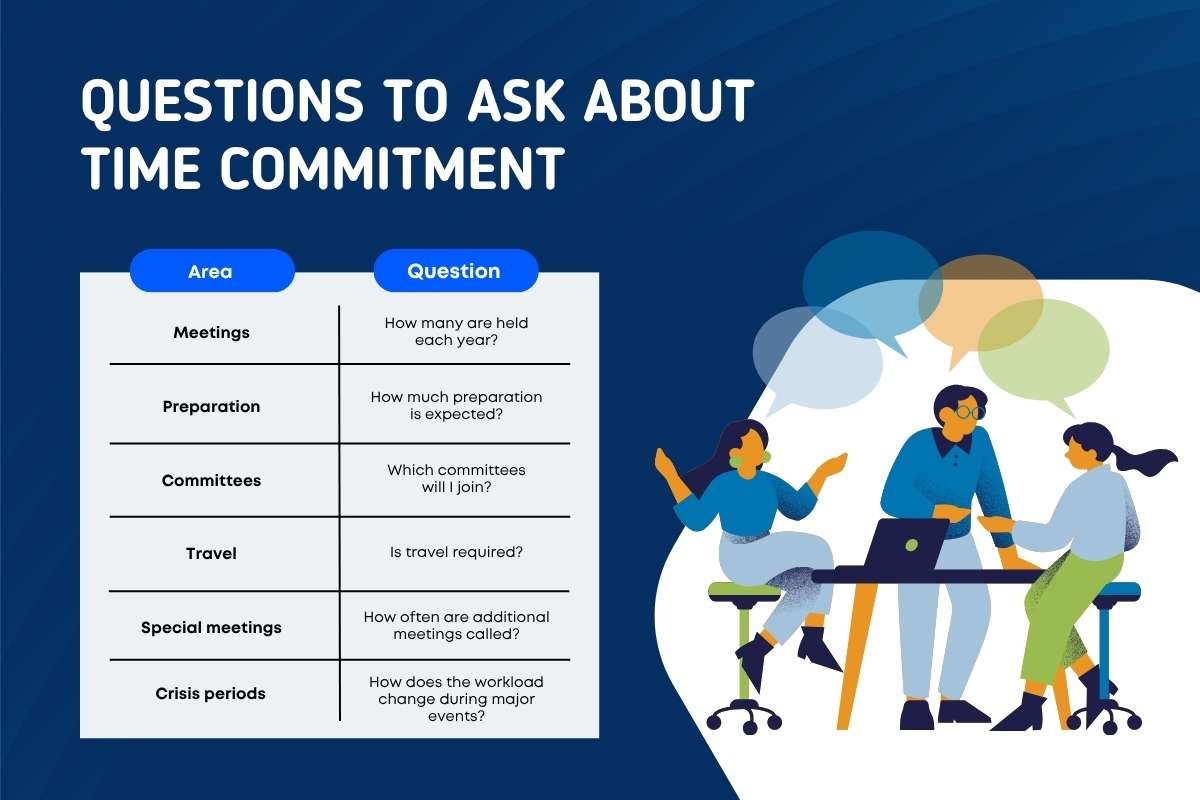
Ask about:
| Area | Question |
| Meetings | How many are held each year? |
| Preparation | How much preparation is expected? |
| Committees | Which committees will I join? |
| Travel | Is travel required? |
| Special meetings | How often are additional meetings called? |
| Crisis periods | How does the workload change during major events? |
Questions about legal risk and protection
Board service comes with legal and fiduciary responsibilities. The level of personal exposure varies by jurisdiction, organisation, and circumstances.
Is D&O insurance provided?
Ask about:
- Coverage limits
- Exclusions
- Who is covered
- Defence costs
- Coverage for former directors
Do not settle for simply hearing, “You’re covered.” Ask to review the relevant policy details.
What does the indemnification agreement cover?
Understand what protection the organisation provides if a claim arises from your board service.
Are there current claims or investigations?
Ask whether the organisation or its directors are involved in litigation, regulatory investigations, material disputes, or other significant proceedings.
Questions about board culture
Some of the most important questions to ask before accepting a board seat are about culture because culture may not appear in formal board documents.
Ask:
- Can directors disagree openly?
- Does the board challenge management?
- Are difficult issues discussed directly?
- Does the chair encourage independent views?
- Do directors receive information early enough to make informed decisions?
Watch for these red flags.
- Vague responsibilities
- High director turnover
- Pressure to accept quickly
- Unclear financial information
- No clarity around D&O insurance
These signs do not automatically mean a board is dysfunctional, but they deserve further investigation.
Questions women should ask themselves

Not every question needs to be directed at the company. If this would be your first board appointment, understanding how to get your first board seat as a woman can also help you assess whether you are ready for the expectations that come with the opportunity.
Before accepting, ask yourself:
Can I add genuine value?
Does your expertise address a real need on the board? Understanding which skills are most valued in board directors can help you assess whether your experience fills a genuine gap in the board’s expertise. If you are still developing the experience or governance knowledge required for board service, board readiness programs for women can provide another pathway for building board-level knowledge and preparation.
Can I commit the required time?
Consider meetings, preparation, committees, travel, and unexpected work.
Can I exercise independent judgment?
Will you be comfortable challenging management or fellow directors when necessary?
Does the organisation fit my professional goals?
Consider whether the board experience supports the type of governance career you want to build.
Would I accept this seat without the prestige?
Looking beyond the title and company name can help you assess whether the role itself is a good professional fit.
Conclusion:
The right questions to ask before accepting a board seat can reveal much more than the job description. They can help you understand the organisation’s financial position, board culture, expectations, risks and protections.
For women entering or expanding their board careers, due diligence should work both ways. As opportunities for women on corporate boards continue to evolve, understanding the specific expectations and risks of each seat remains essential.
The company is deciding whether you are right for the board. You are also deciding whether the board is right for you.
Frequently asked questions:
1. What are the most important questions to ask before joining a board?
Ask why the seat is open, what is expected of you, the company’s finances and risks, board culture, time commitment, D&O insurance, and potential conflicts.
2. What should I ask about D&O insurance?
Ask about coverage limits, exclusions, covered individuals, defence costs, and how it works with indemnification.
3. How do I know if a board is dysfunctional?
Look for poor information flow, limited debate, unclear responsibilities, high director turnover, or a chair who discourages meaningful discussion.
4. What should I ask about time commitment?
Ask about meetings, preparation, committee work, travel, communication between meetings, and crisis-related workload.
5. Can a board member be personally liable?
Potentially. Liability depends on the jurisdiction, conduct, applicable laws, insurance, and indemnification. Consider legal advice before accepting a seat.