

This article explains how modern remote teams depend on strong time coordination across countries and continents. It covers the meaning of time zone management for asynchronous leaders, why it matters, common mistakes, practical strategies, communication methods, scheduling habits, tools, and leadership techniques that improve productivity. The blog also includes real-life examples, case studies, expert-backed insights, and answers to common questions that remote managers often face while leading distributed teams.
Time zone management for asynchronous leaders means organizing work across different time zones without expecting everyone to work at the same time.
In asynchronous teams, employees do not need to stay online together all day. People work according to their local schedules. Tasks move forward through clear communication, documentation, and planned collaboration instead of constant meetings.
This leadership style has become common after the rise of remote work.
Companies now hire talent globally rather than limiting recruitment to a single city or country. A designer may work from India, a developer from Germany, and a marketing manager from the United States. Without proper coordination, confusion becomes normal.
That is where time zone management becomes essential.
A good leader creates systems that allow work to continue smoothly even when team members sleep in different parts of the world.
A Real-Life Example: GitLab Remote Work Guide
GitLab is one of the best-known remote-first companies in the world. The company operates with employees across many countries and time zones. Instead of depending heavily on meetings, GitLab focuses on documentation and written communication.
Employees record updates, create detailed workflows, and share information openly. Team members can check updates when they start work instead of waiting for live meetings. This approach reduced unnecessary interruptions and improved productivity.
This is a strong example of time zone management for asynchronous leaders in action.
Why is time zone management important for asynchronous leaders?
Remote work gives companies access to global talent, but it also creates communication gaps.
Without proper systems, teams struggle with delays, confusion, missed deadlines, and employee exhaustion.
That is why time zone management directly affects productivity and team morale.
1. It reduces burnout
Many remote employees feel pressure to stay online all the time. A manager in New York may message an employee in India late at night without realizing the time difference. Over time, employees lose work-life balance. Good leaders prevent this problem by respecting time boundaries. They avoid unnecessary late-night meetings and create clear response expectations.
2. It improves communication
Asynchronous teams rely heavily on written communication. When instructions stay unclear, projects slow down quickly. Leaders who focus on time zone management for asynchronous leaders create systems where Information is easy to access and understand. Instead of repeating the same discussion in multiple meetings, they document decisions properly.
3. It speeds up workflows
At first, asynchronous work may seem slower. In reality, it can increase productivity. Teams in different time zones can continue projects around the clock. One employee completes a task and hands it to another teammate in a different country. This creates a continuous work cycle.
Case study example: Automattic distributed work culture
Automattic, the company behind WordPress, manages a fully distributed workforce across multiple countries. The company depends heavily on asynchronous communication tools like Slack, internal blogs, and shared documentation.
Employees communicate clearly without requiring constant meetings.
This is another strong example of effective Time zone management.
Challenges of time zone management for asynchronous leaders
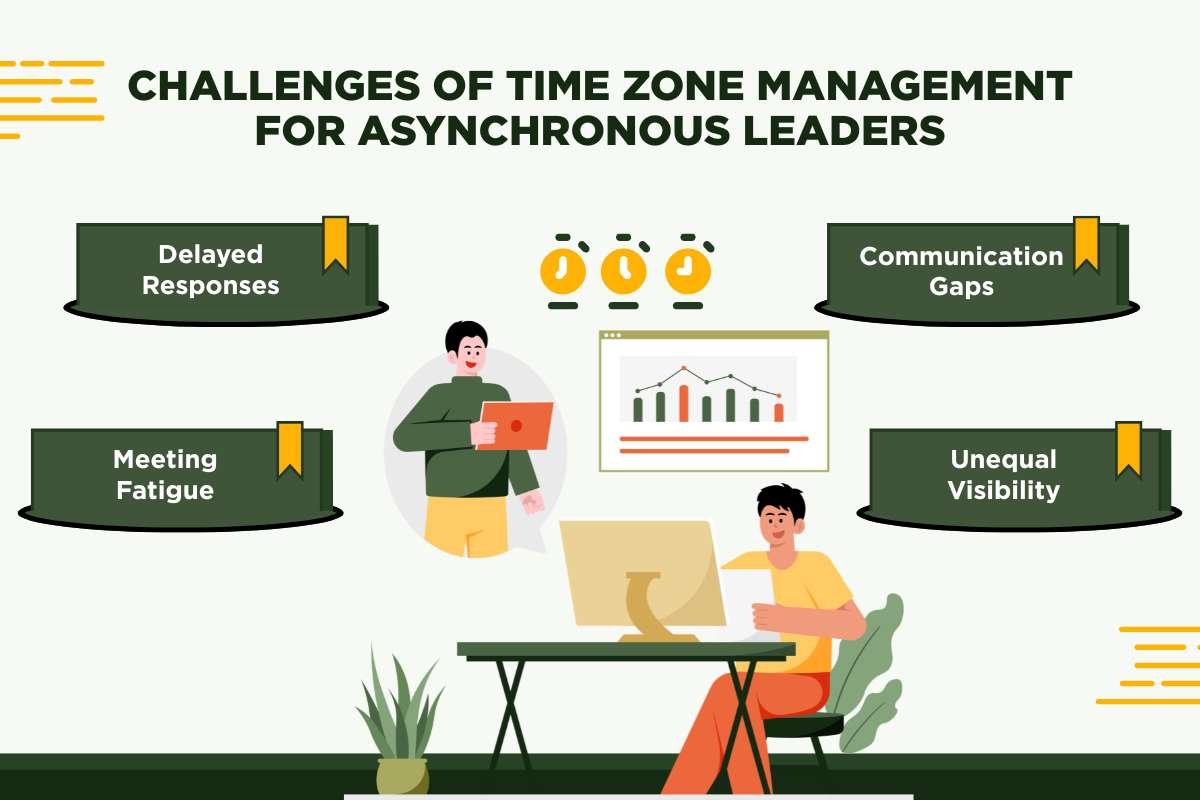
Managing a remote team across multiple countries may sound modern and efficient, but the reality is often far more complicated. Different time zones create communication delays, scheduling confusion, employee burnout, and collaboration gaps. That is why many businesses now focus heavily on asynchronous leaders to keep teams productive and connected.
In asynchronous work environments, employees do not work at the same time. One team member may begin their day while another is already offline. This setup gives employees flexibility, but it also creates several leadership challenges.
Modern companies must solve these problems carefully because Google’s latest content and user experience standards now prioritize people-first information, helpful content, real expertise, and practical solutions. Businesses that understand these challenges can build stronger remote teams and improve employee satisfaction.
Delayed Responses
One of the biggest challenges in global remote teams is delayed communication. In a traditional office, employees can ask quick questions and receive answers instantly. In asynchronous work, that does not happen. An employee in India may send a message during the afternoon, but their manager in the United States might still be asleep. The answer may arrive many hours later. This delay affects workflows badly when teams depend too much on instant replies.
Read More: Why Does Asynchronous Management Works Better for Modern Teams?
Why delayed responses become a serious problem?
Small communication gaps often create bigger operational problems.
For example:
- A designer waits for approval before starting work.
- A developer cannot continue coding without clarification.
- A marketing campaign gets delayed because one decision remains pending.
A simple five-minute discussion may suddenly take an entire day. This slows productivity and frustrates employees. That is why strong time zone management focuses on reducing communication dependency.
How smart leaders solve delayed response problems?
Experienced asynchronous leaders create systems that reduce unnecessary waiting.
They usually:
- Share detailed project instructions
- Record video explanations
- Use shared documentation
- Clarify deadlines clearly
- Anticipate possible questions early
This approach helps employees continue working independently. Good documentation becomes extremely important in asynchronous environments because it reduces confusion and saves time. That is one reason why asynchronous leaders focus on time zone management, which now plays a major role in remote business success.
Meeting fatigue
Many companies still rely too heavily on live meetings even after shifting to remote work. This creates another major challenge. When teams work across different time zones, someone always joins meetings outside their normal working hours. An employee may wake up early at 5 AM for a call. Another may stay online late at night after dinner. Over time, this damages work-life balance.
Why meeting fatigue hurts productivity?
Too many meetings reduce focus and energy. Employees lose time switching between discussions instead of completing meaningful work. Remote workers also experience mental exhaustion when their schedules constantly change. This problem becomes worse in global teams. A meeting that works perfectly for one region may become stressful for another.
How asynchronous leaders reduce meeting fatigue?
Strong time zone management reduces dependence on live meetings. Instead of holding daily calls, experienced leaders use:
- Recorded video updates
- Written summaries
- Shared dashboards
- Task management tools
- Weekly async reports
This gives employees flexibility while still keeping teams informed. Meetings become shorter, more purposeful, and less stressful. Employees gain more uninterrupted time for focused work.
Communication gaps
Communication looks simple until teams stop working in the same office. Written communication creates misunderstandings more often than people realize. In remote environments, employees cannot always see facial expressions, voice tone, or body language. A short message may sound rude even when the sender never intended that. This becomes one of the most overlooked challenges in time zone management for leaders.
Why communication gaps happen?
People interpret written messages differently based on:
- Language differences
- Cultural backgrounds
- Stress levels
- Communication styles
- Personal expectations
For example, a manager may write: “Need this today.”
The message may sound direct and efficient to one employee but aggressive and impatient to another. Over time, repeated misunderstandings damage trust within teams.
How leaders improve communication?
Good asynchronous leaders encourage communication that feels clear, respectful, and complete.
They focus on:
- Adding context to instructions
- Using friendly language
- Explaining priorities clearly
- Avoiding rushed responses
- Encouraging questions
Some companies even create communication guidelines to help employees write better messages. Clear communication improves collaboration and reduces emotional stress. That is why communication quality is central to successful time zone management.
Unequal visibility
Another hidden challenge in remote work is unequal employee visibility. Employees who share overlapping schedules with leadership often receive more attention naturally. Others may feel invisible simply because they work in different time zones. This creates fairness problems inside global teams.
Why unequal visibility happen?
Managers usually communicate more with employees who work during similar hours.
These employees:
- Join more meetings
- Respond faster
- Participate in live discussions
- Build stronger personal connections
Meanwhile, employees in distant time zones may contribute equally but remain less visible. This affects promotions, recognition, and career growth.
How strong leaders create fairness?
Good time zone management for leaders ensures every employee receives equal opportunities regardless of location.
Smart leaders solve visibility problems by:
- Recording meetings for everyone
- Sharing written updates publicly
- Tracking performance based on results
- Rotating meeting times fairly
- Recognizing achievements openly
They focus on work quality instead of online presence. This creates a healthier and more inclusive remote culture. Employees feel valued no matter where they live.
How can leaders build better time zone coordination?
- Create Communication Rules: Every remote team needs communication standards.
Employees should know:
- Expected response times
- Meeting policies
- Emergency communication channels
- Documentation requirements
Clear rules reduce confusion. This is one of the most practical aspects of time zone management.
➤ Use Shared Documentation:
Written documentation becomes the backbone of asynchronous work. Instead of depending on memory or verbal instructions, teams record processes clearly. Tools like Notion, Confluence, and Google Docs help teams stay aligned. When information stays documented, employees waste less time asking repeated questions.
➤ Focus on Outcome Instead of Online Hours:
Many managers still track productivity through online activity. That approach fails in asynchronous teams. Good leaders focus on completed work instead of constant availability. Employees perform better when trusted.
➤ Build Overlap Hours Carefully:
Some overlap helps collaboration. Teams can maintain one or two shared hours daily for urgent discussions. However, forcing long overlapping schedules defeats the purpose of asynchronous work. Balanced scheduling supports healthier collaboration.
What tools help with time zone management?
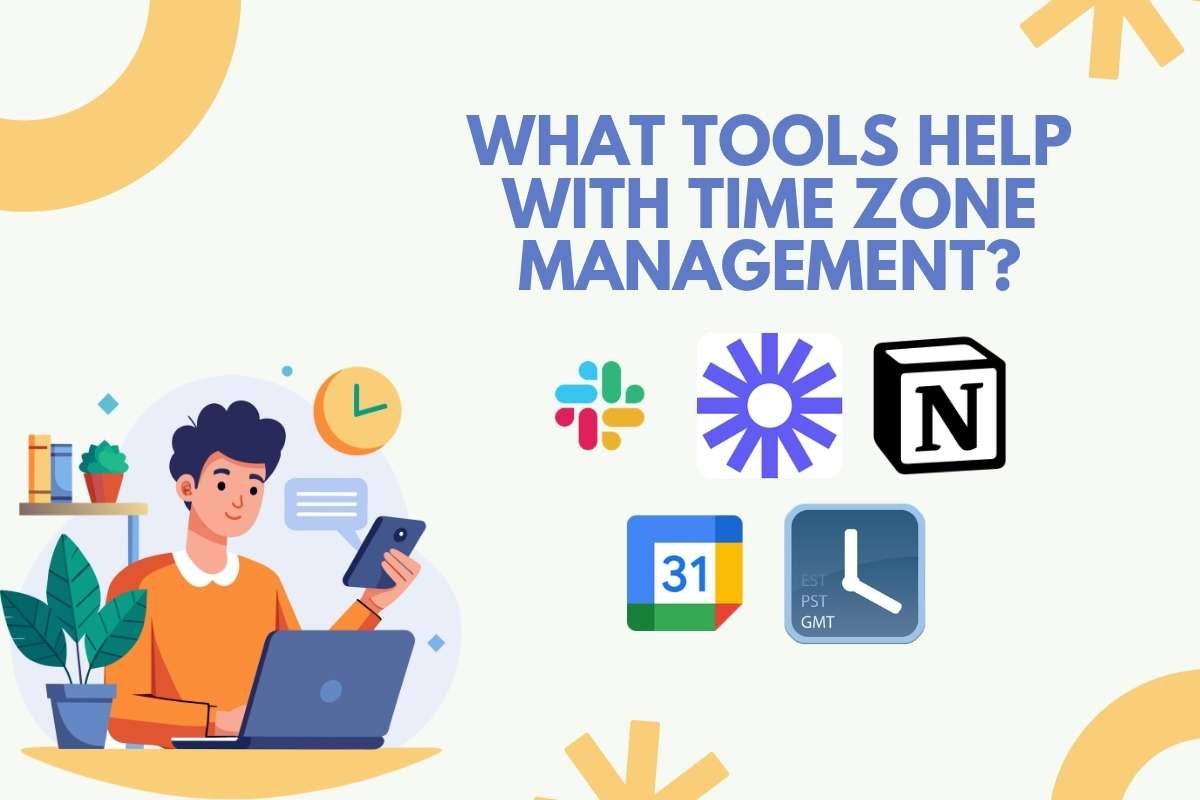
Technology has become one of the biggest reasons remote teams can work smoothly across countries and continents. When employees work from different time zones, communication delays, missed meetings, and scheduling confusion can slow everything down. That is why the right tools matter so much.
For teams that follow asynchronous work, these tools help employees stay connected without forcing everyone to stay online at the same time. They improve communication, reduce stress, and make daily work easier for global teams.
1. Slack
Slack helps global teams manage conversations asynchronously through organized channels, status updates, and flexible messaging that supports better time zone management while improving team collaboration and productivity.
2. Loom
Loom enables teams to replace unnecessary meetings with recorded video explanations, making communication clearer, faster, and more engaging for distributed teams working across different time zones.
3. Notion
Notion acts as a centralized workspace where remote teams can store projects, workflows, and company knowledge, improving transparency, collaboration, and information access for asynchronous work environments.
4. Google Calendar
Google simplifies global scheduling by allowing teams to compare time zones, manage availability, and organize meetings efficiently, reducing conflicts and improving remote coordination.
5. World Time Buddy:
World Time Buddy helps leaders instantly compare international time zones, making it easier to schedule meetings fairly and improve productivity for remote teams and global businesses.
What leadership skills matter most in asynchronous teams?
Technology alone cannot solve remote work problems. Leadership behavior matters more.
- Empathy: Leaders must understand employee schedules and personal boundaries. A message sent during normal office hours in one country may reach another employee at midnight. Empathy improves trust.
- Clarity: Unclear instructions create delays. Good asynchronous leaders communicate with precision. They explain tasks, deadlines, goals, and expectations properly.
- Patience: Not every reply arrives instantly. Strong leaders avoid panic when responses take time.They create systems that reduce urgency whenever possible.
- Accountability: Asynchronous teams still need ownership. Employees should understand responsibilities clearly. That is another critical part of time zone management for asynchronous leaders.
Can asynchronous leadership increase productivity?
Yes. Many companies report better productivity after shifting toward asynchronous work.
Employees gain a deeper focus because constant meetings decrease.
Work becomes more flexible.
People can perform tasks during their most productive hours instead of following rigid schedules.
Example: Basecamp Remote Work Philosophy
Basecamp has promoted asynchronous communication for years. The company encourages fewer meetings and more thoughtful written updates. Employees receive more uninterrupted time for meaningful work.
This shows how time zone management can improve operational efficiency.
How do leaders prevent isolation in remote teams?

One major risk in asynchronous work is loneliness. Employees may feel disconnected from coworkers. Good leaders solve this intentionally.
- Encourage Casual Interaction: Teams should have non-work communication spaces. Simple conversations help employees feel connected.
- Celebrate Wins Publicly: Recognition matters in remote environments. Leaders should appreciate contributions openly.
- Use Video Messages Occasionally: Video communication adds personality and emotional connection. This strengthens relationships inside distributed teams. These small actions support healthier time zone management for asynchronous leaders.
What are the biggest mistakes asynchronous leaders make?
- Too Many Meetings: If employees still attend endless meetings, the team is not truly asynchronous.
- Poor Documentation: Missing information creates dependency on live conversations. That slows productivity.
- Ignoring Employee Time Zones: Scheduling meetings without checking local hours damages morale quickly.
- Expecting Instant Replies: Asynchronous work depends on flexibility. Leaders who expect immediate responses create stress. Avoiding these mistakes improves the management of time zones for asynchronous leaders significantly.
How does time zone management affect company culture?
Remote culture depends heavily on communication quality. When leadership respects employee schedules, trust grows naturally. Employees feel valued instead of controlled.
Healthy asynchronous cultures focus on:
- Transparency
- Flexibility
- Trust
- Clear communication
- Accountability
Strong time zone management creates a more inclusive workplace because employees across countries receive equal opportunities to contribute.
What does the future look like for asynchronous leadership?

Remote work continues to grow globally. Companies increasingly hire across borders to access specialized talent. This trend makes time zone management for asynchronous leaders even more important.
Future workplaces will likely depend more on:
- AI-assisted scheduling
- Smart documentation systems
- Recorded collaboration tools
- Flexible work structures
- Outcome-based performance tracking
Leaders who adapt early will build stronger global teams.
Conclusion
A remote team without proper coordination feels like an orchestra playing different songs at the same time.
People work hard, yet confusion grows.
Deadlines shift. Messages pile up. Meetings steal energy.
But the right leadership changes everything.
Time zone management for asynchronous leaders is not just about clocks or calendars. It is about creating clarity, trust, balance, and smoother collaboration across the world.
The best asynchronous leaders do not demand constant online presence. They create systems that help people work smarter, communicate better, and stay productive without sacrificing their personal lives.
That is the future of modern leadership.
FAQs
1) What is the biggest benefit of time zone management for asynchronous leaders?
The biggest benefit is improved flexibility and productivity. Teams can work efficiently across countries without requiring everyone to stay online at the same time.
2) Which companies successfully use asynchronous leadership?
Companies like GitLab, Automattic, and Basecamp are strong examples. They use documentation, flexible communication, and remote-first systems to manage global teams successfully.
Thank You For Reading!
See More
Asynchronous vs Synchronous Work: Which Work Style Drives Higher Productivity in 2026?